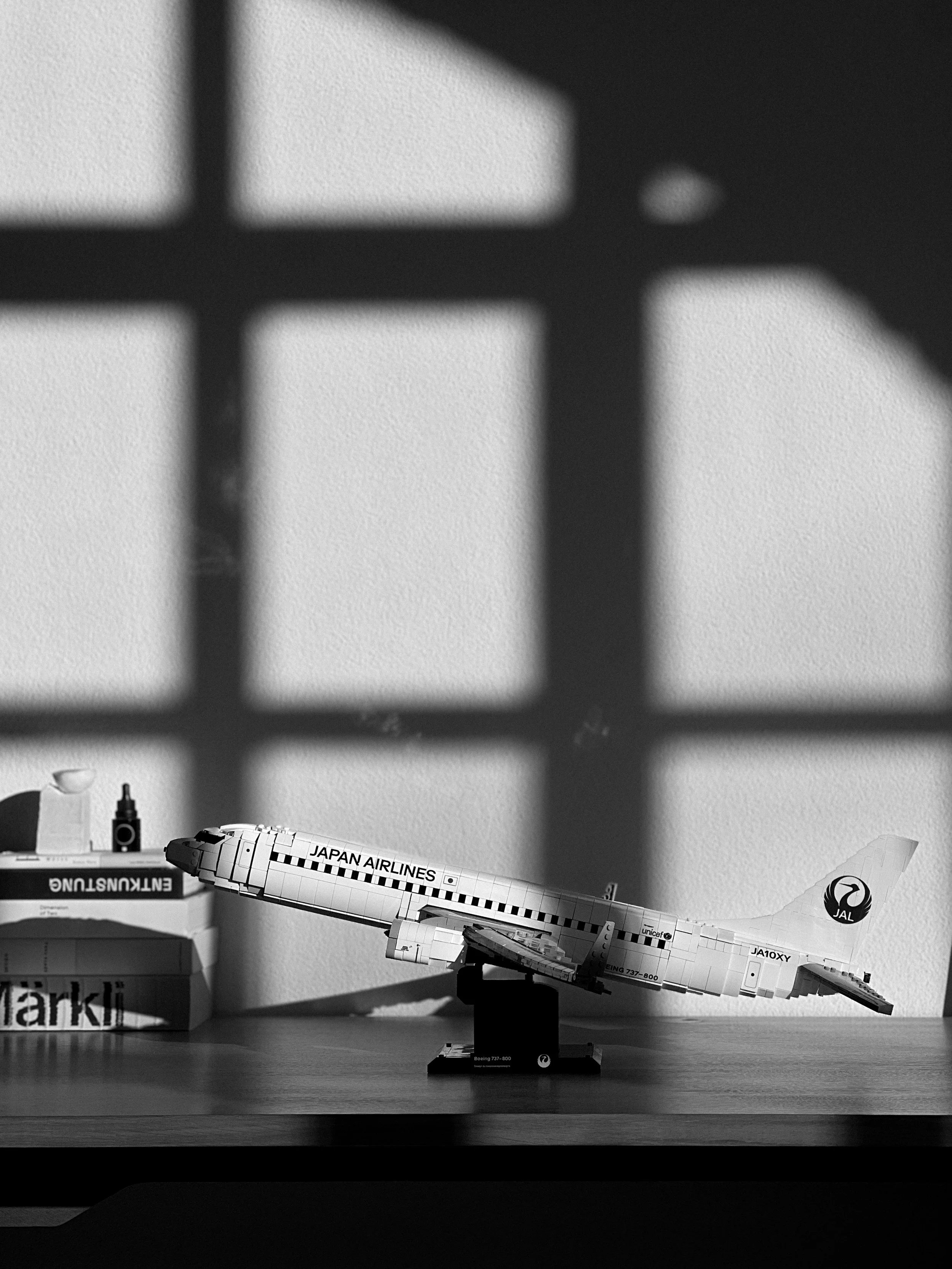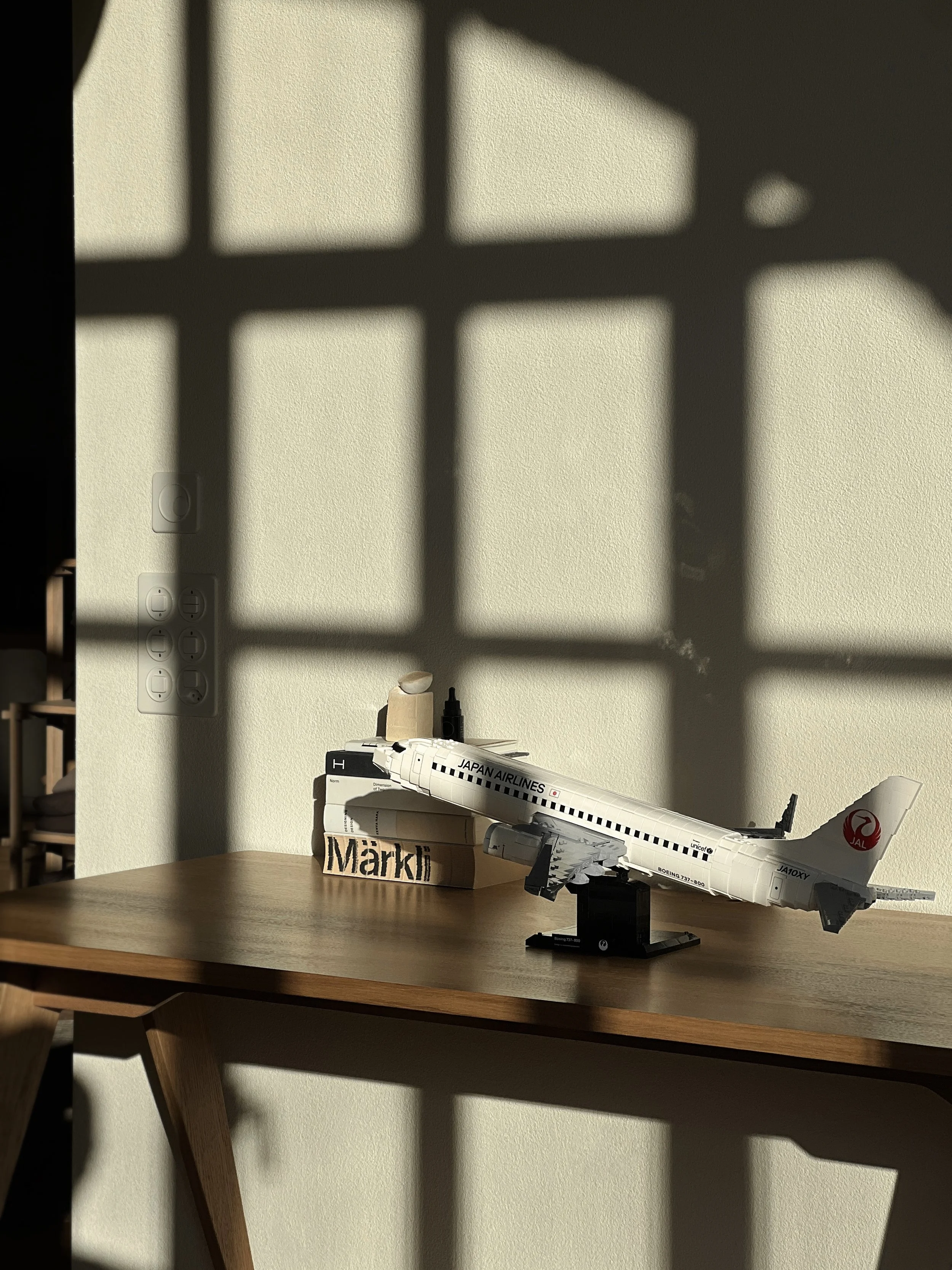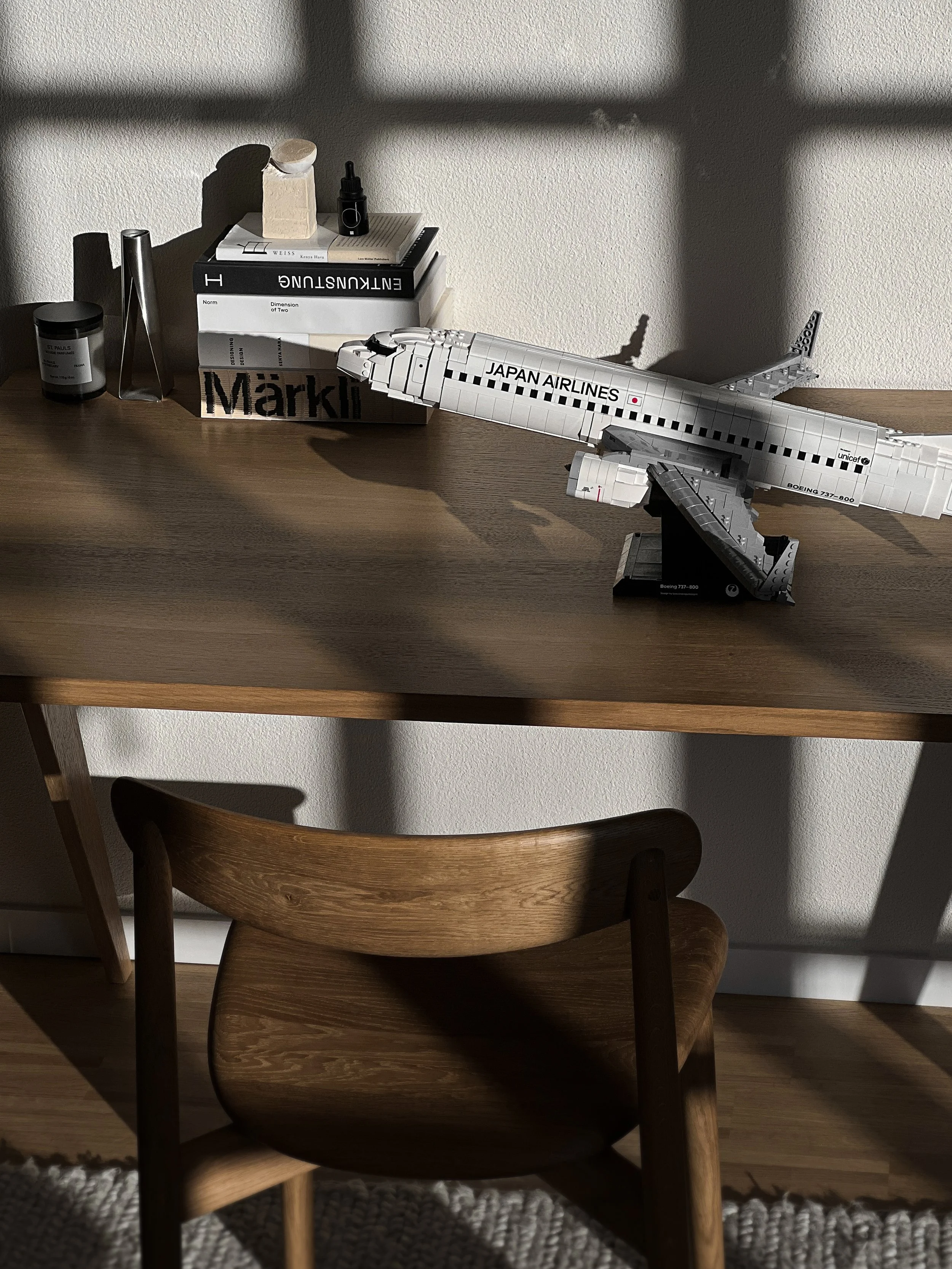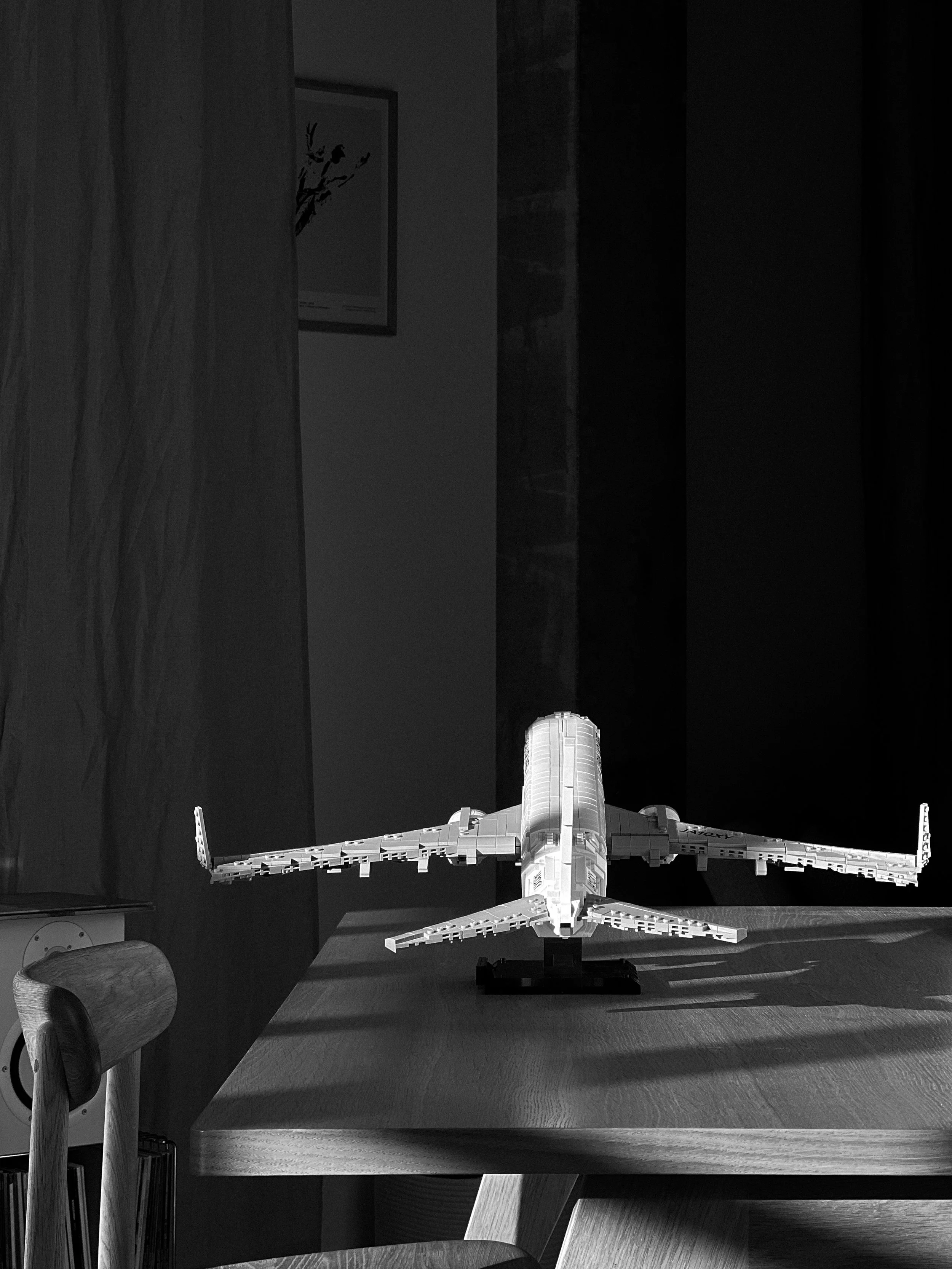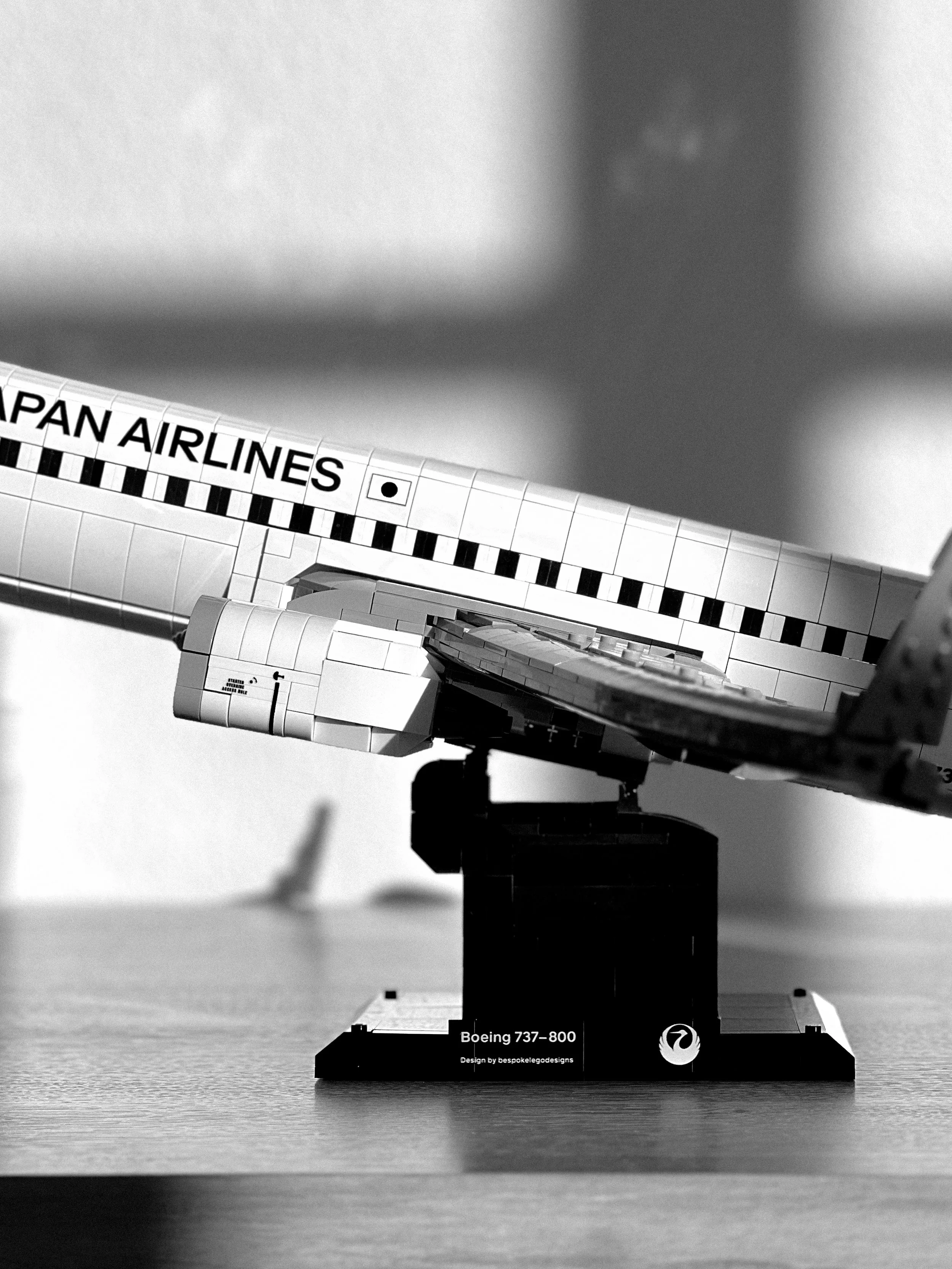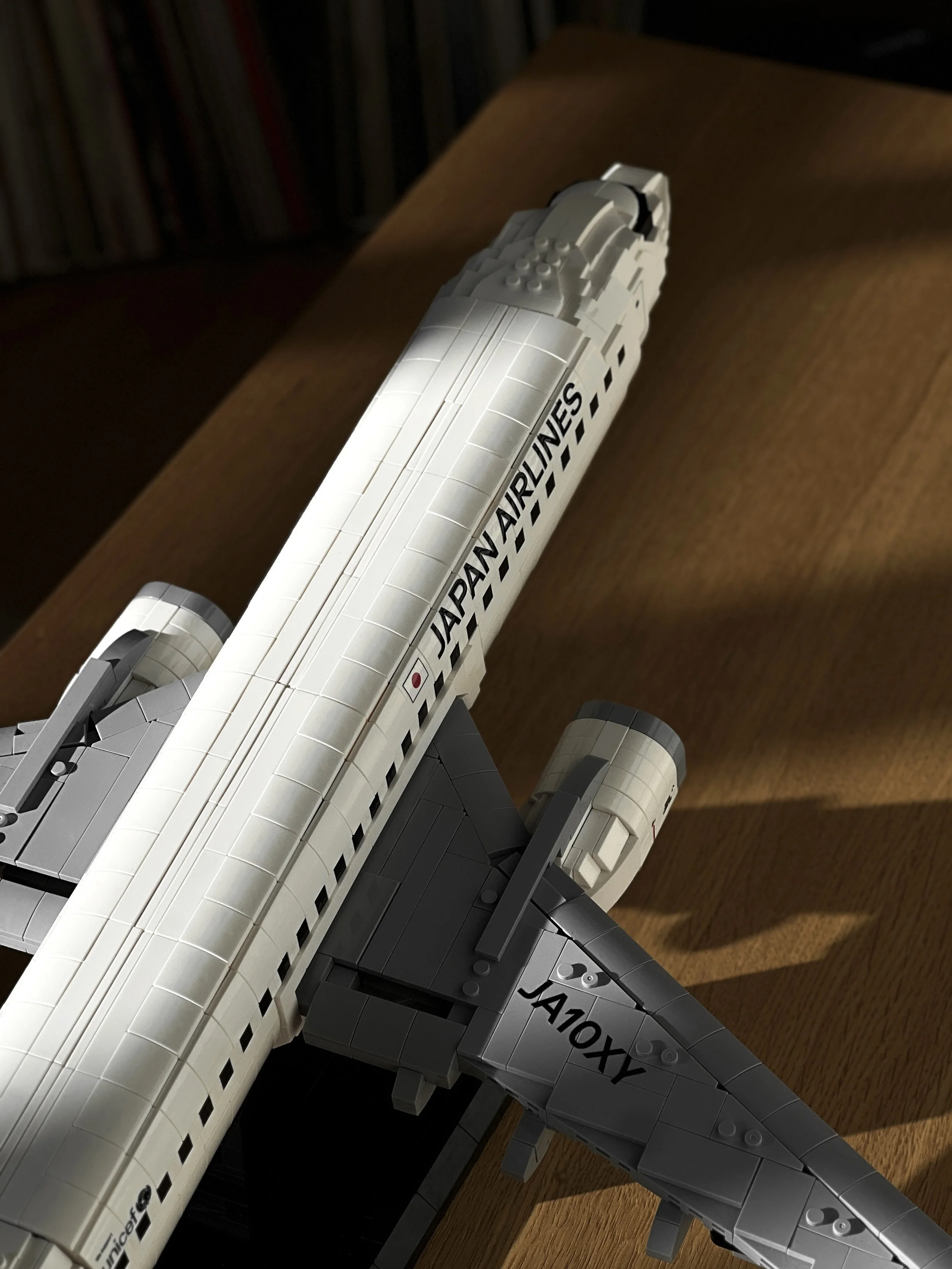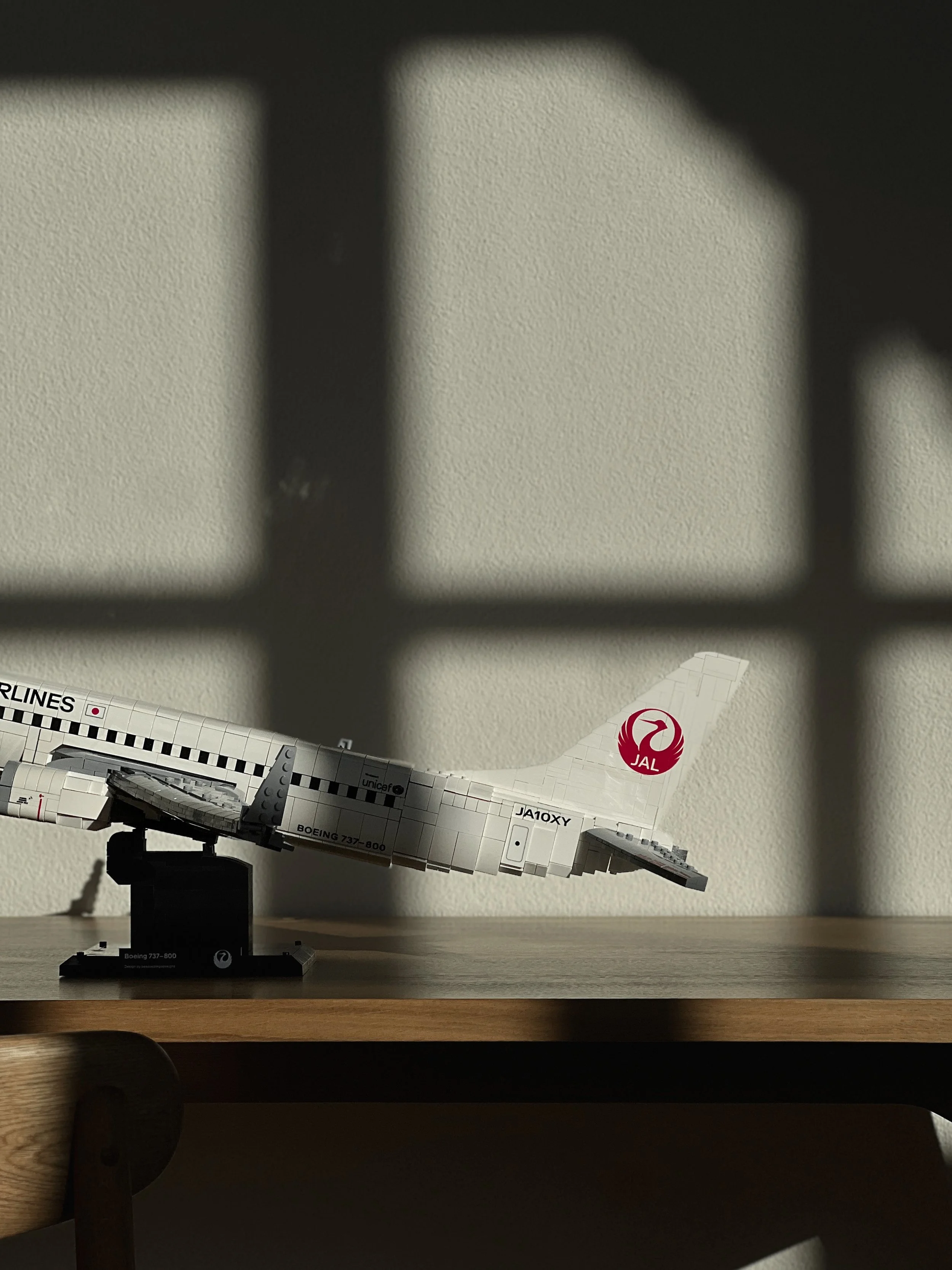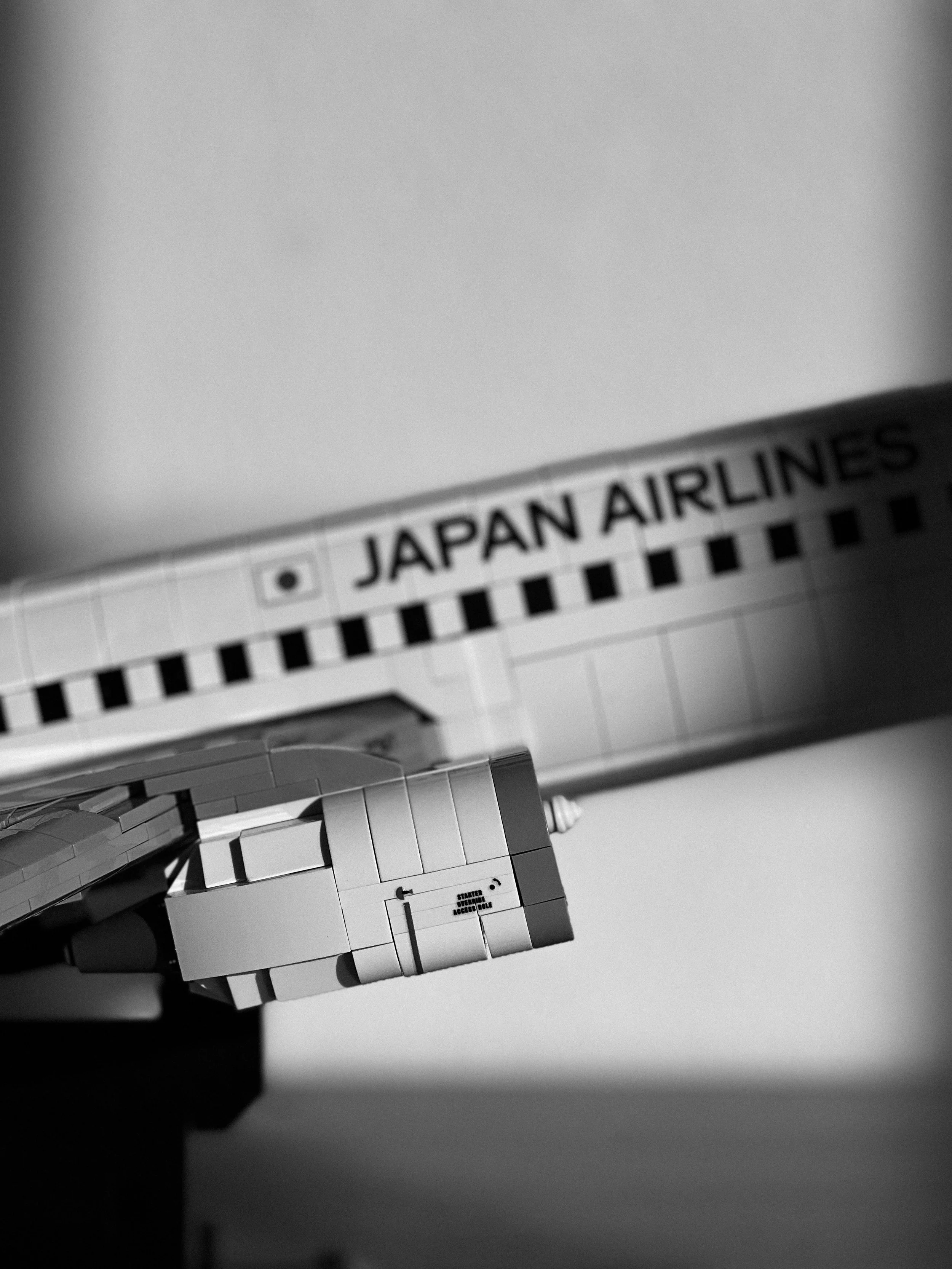
There is something rather contradictory about my relationship with aviation. I am fascinated by aircraft, their engineering, their proportions and the extraordinary elegance of objects designed to overcome gravity. At the same time, I am deeply uncomfortable with the idea of actually being inside one.
Perhaps that is precisely why the Boeing 737–800 appealed to me. Here was an opportunity to spend time with an aircraft without ever leaving the ground. No boarding announcement, no turbulence, no nervous glances towards the cabin crew. Just 2,673 pieces and the rather comforting certainty that everything would remain exactly where I had placed it.
An exercise in proportion
The Boeing 737 is not necessarily an aircraft celebrated for its beauty. It is a familiar presence, an everyday object of commercial aviation. Yet familiarity can make us overlook the qualities of a design.
Look closely and there is a remarkable visual balance between the elongated fuselage, the swept wings, the engines and the vertical stabiliser. Nothing feels entirely arbitrary. Every curve, transition and proportion serves a purpose.
The model, designed by BespokeLegoDesigns and distributed by Cubertime, translates these characteristics into a medium that is inherently angular. It is a fascinating exercise in approximation: convincing the eye to perceive continuous surfaces where there are, in reality, hundreds of individual elements.
The long way to takeoff
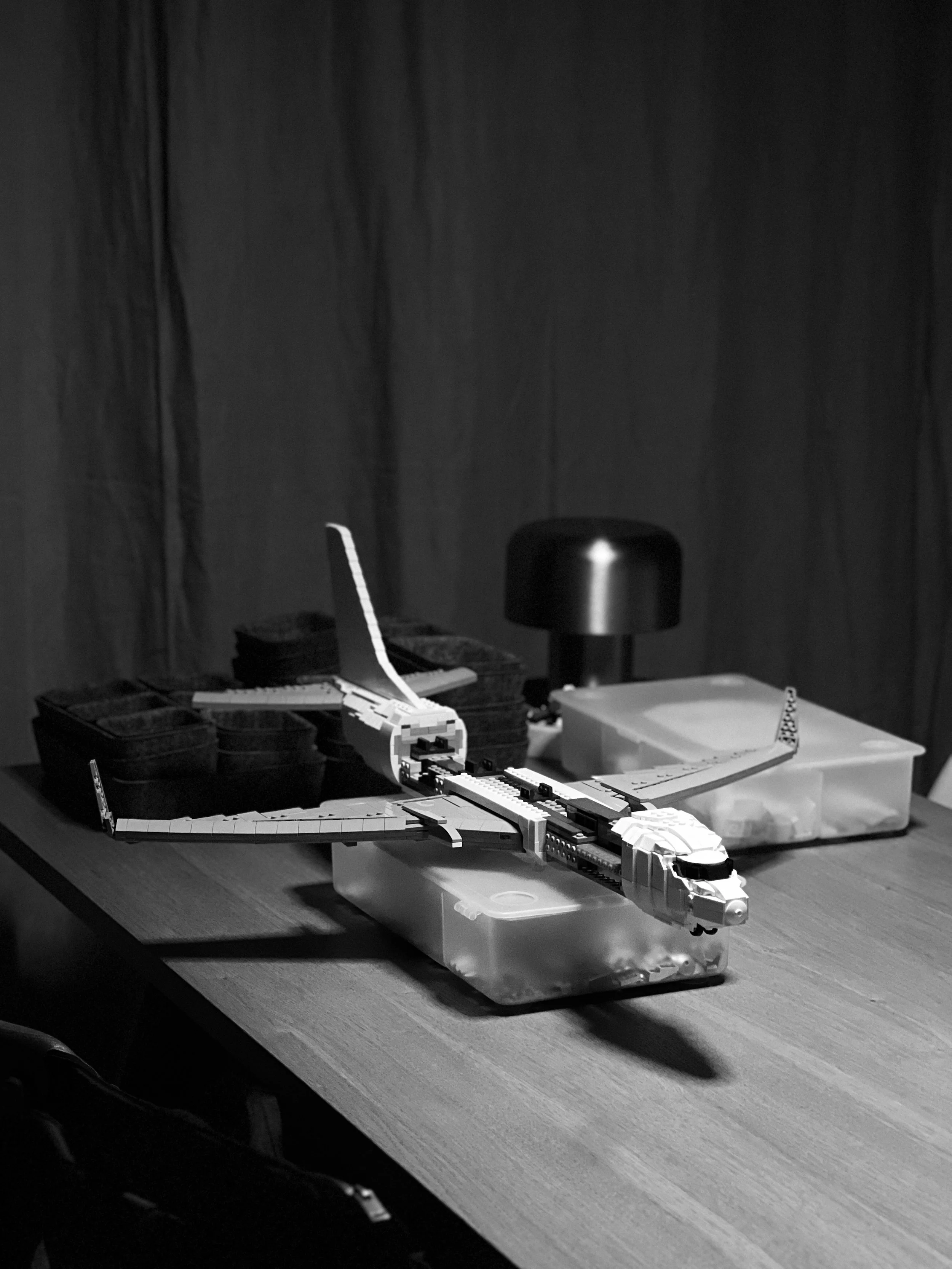
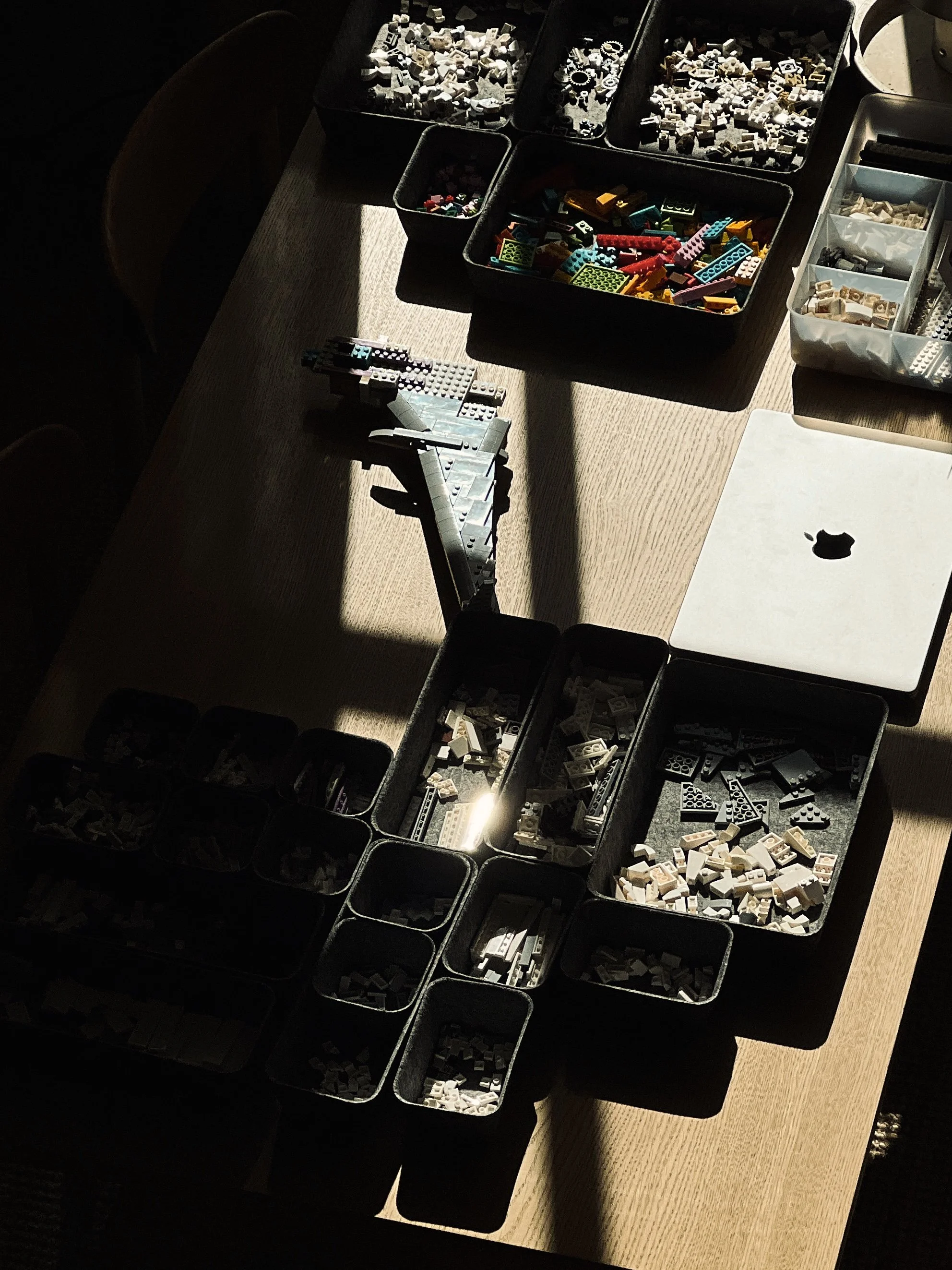
Building the 737–800 was not a quick afternoon exercise. It demanded several sessions, considerable concentration and a willingness to work through some particularly intricate construction sequences.
Unlike smaller models, where progress becomes visible almost immediately, an aircraft of this scale requires patience. The fuselage grows gradually, its internal structure revealing the considerable thought behind the design. Only later does the object begin to acquire its recognisable silhouette.
There is a particular satisfaction in that transition. What begins as a collection of seemingly unrelated components slowly becomes something familiar, something with a clear identity and purpose.
The experience was not entirely effortless. Some elements required more attention than I would have preferred, and the consistency of the parts was not always beyond criticism. A model of this complexity inevitably exposes small variations in clutch and fit.
Still, those moments did not define the experience. The underlying design remained compelling, and the gradual emergence of the aircraft provided more than enough motivation to continue.
An aircraft of my own
One of the most rewarding aspects of the project was the opportunity to approach the finished aircraft as a design object rather than simply a reproduction.
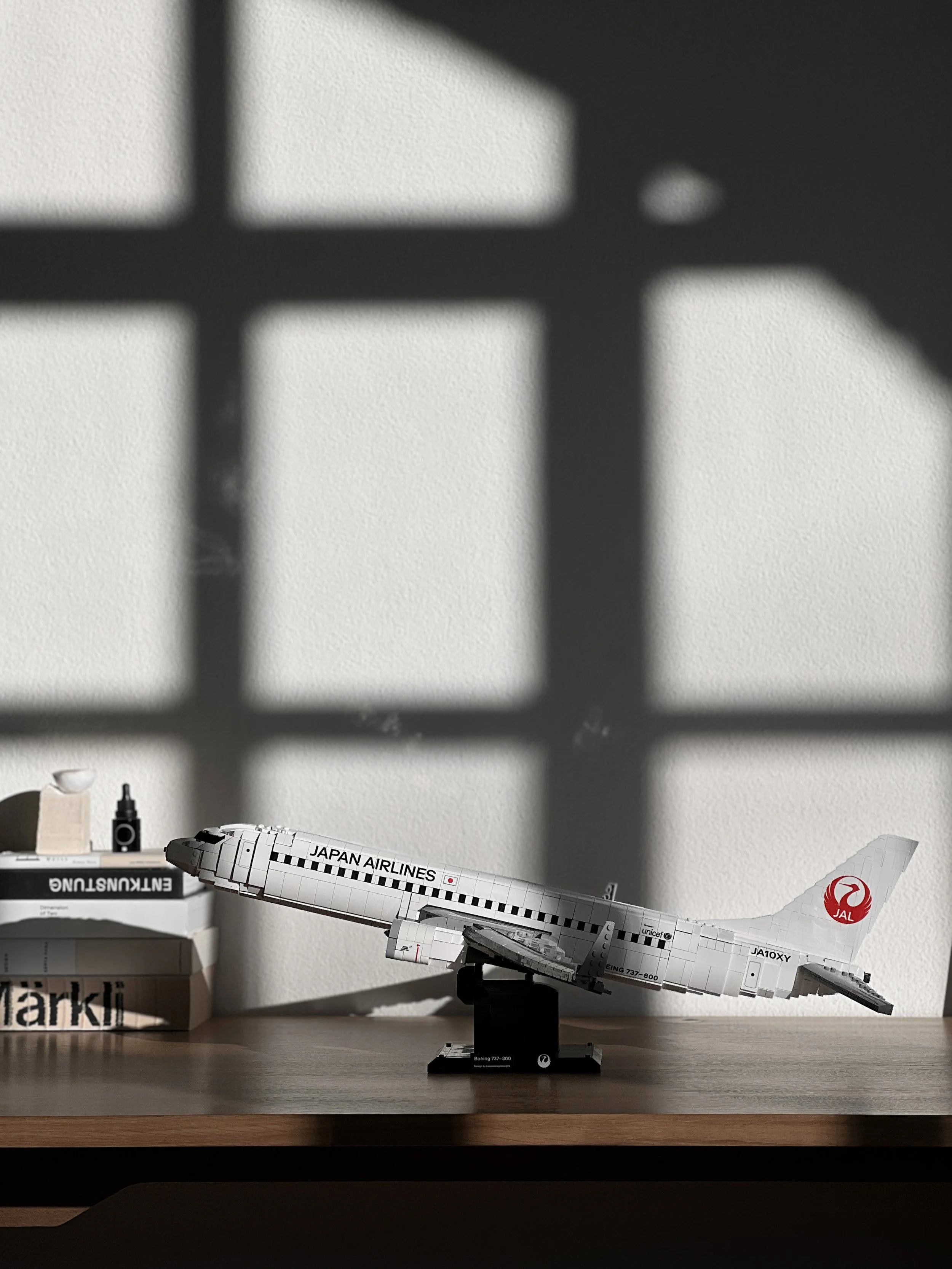
I developed a custom livery inspired by the visual language of Japan Airlines, interpreting its graphic identity with a degree of creative freedom. The intention was not to produce an exact airline replica, but to give the model a visual character that felt deliberate and personal.
Typography, colour and proportion became part of the process. The decals were not merely decoration. They helped establish the identity of the aircraft, bringing a sense of visual coherence to its already distinctive silhouette.
It was an enjoyable intersection of two interests: the precision of model building and the quieter, more subjective discipline of graphic design.
The beauty of stillness
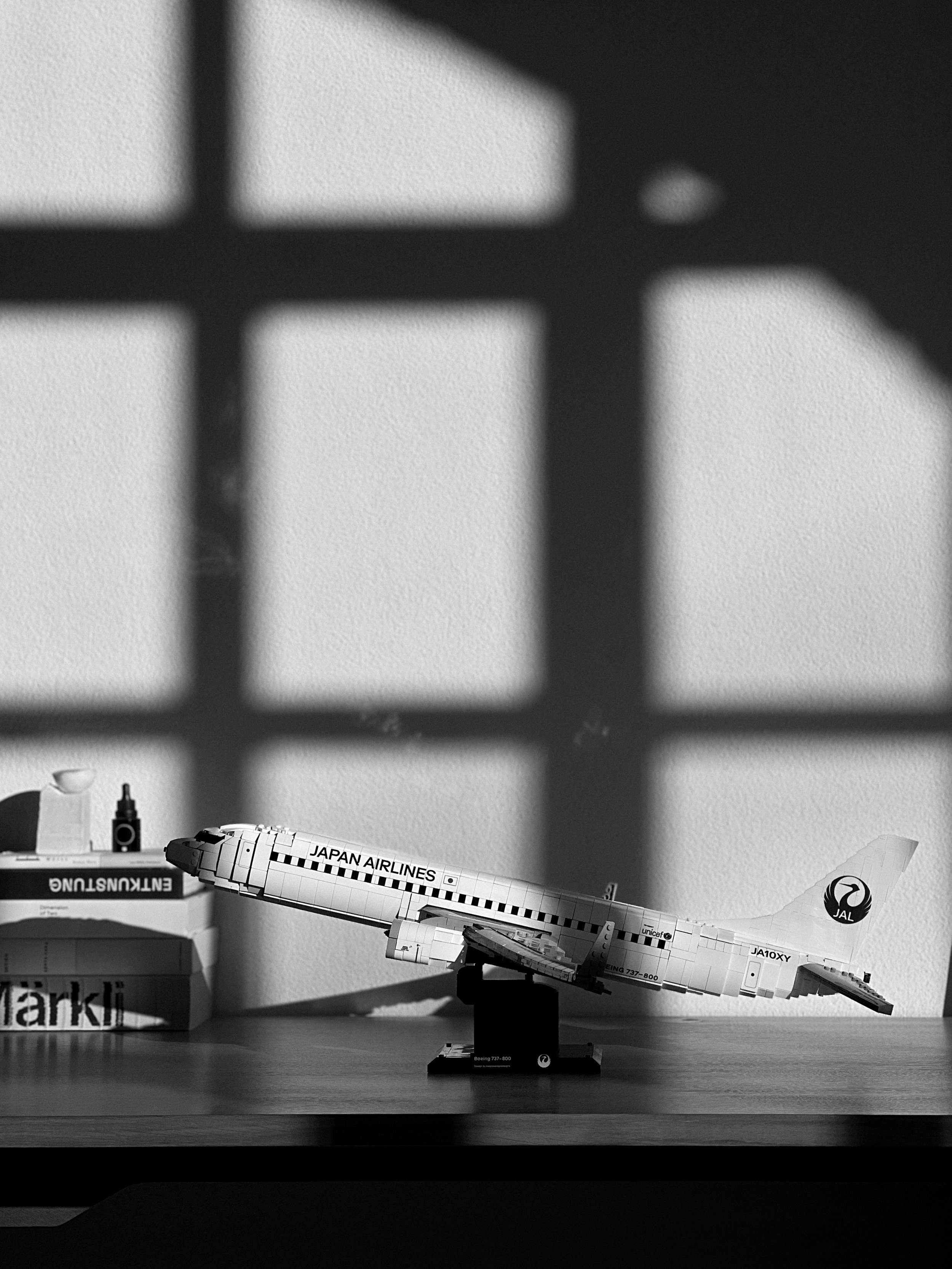
Once completed, the Boeing revealed a quality I had been hoping for from the beginning: presence.
Its wings establish a broad horizontal gesture, while the fuselage introduces a sense of direction and movement. Even standing perfectly still, the aircraft appears ready to depart.
That tension between movement and stillness is perhaps what I appreciate most about aviation design. An aircraft is an object whose entire existence is defined by motion, yet its form can be equally compelling when motion is absent.
For someone who finds actual flying rather unsettling, there is something reassuring about being able to appreciate that beauty from a safe distance.
An unexpected landing
Unfortunately, the story did not end quite as peacefully as intended.
Approximately five minutes after taking the final photographs, the completed aircraft suffered a rather spectacular accident. The model fell, and a considerable portion of the construction came apart.
After so many hours of careful assembly, the sight was not particularly encouraging. For a brief moment, it seemed that my relationship with aviation had found yet another way to become unnecessarily dramatic.
Fortunately, the damage was not permanent. With patience, the aircraft was fully restored, returning to its original appearance as though nothing had happened.
It was an unplanned final chapter, although perhaps a fitting one for a project about an aircraft and someone who has never been particularly comfortable with the concept of landing.
Final approach
The Cubertime Boeing 737–800 is not a model I would describe as effortless. Its scale, complexity and occasional material inconsistencies demand patience and a certain degree of commitment.
But it offers something more meaningful than a straightforward building experience. It encourages a closer look at an object we have become accustomed to seeing without really noticing.
For me, it became an exercise in observation, proportion and design. An opportunity to explore the aesthetics of aviation without confronting the part of aviation I find considerably less appealing.
And perhaps that is the real pleasure of building. Not simply reproducing an object, but discovering why it matters to us in the first place.
For now, my Boeing is safely back on display. Fully restored, perfectly stationary and, ideally, remaining that way.