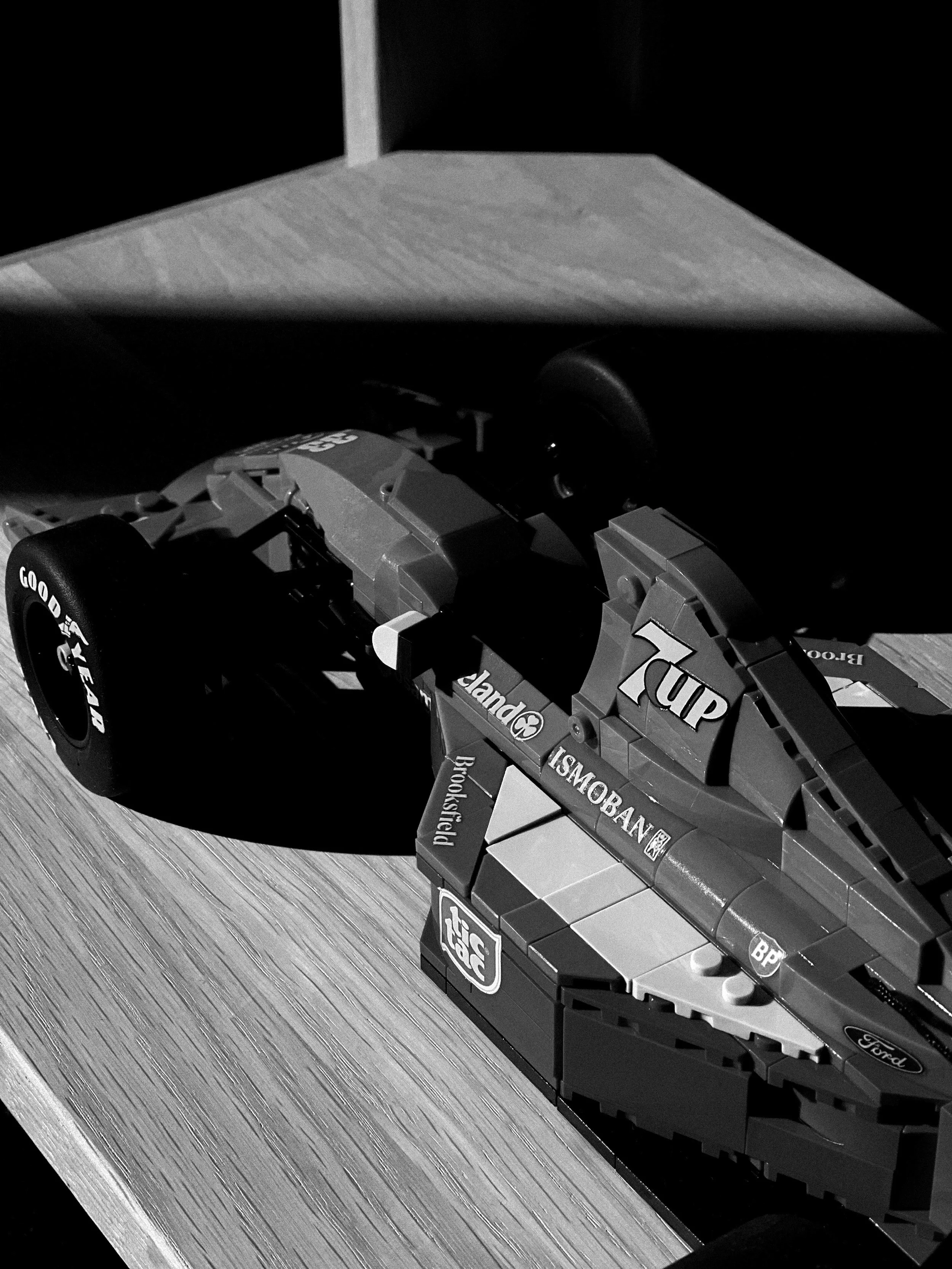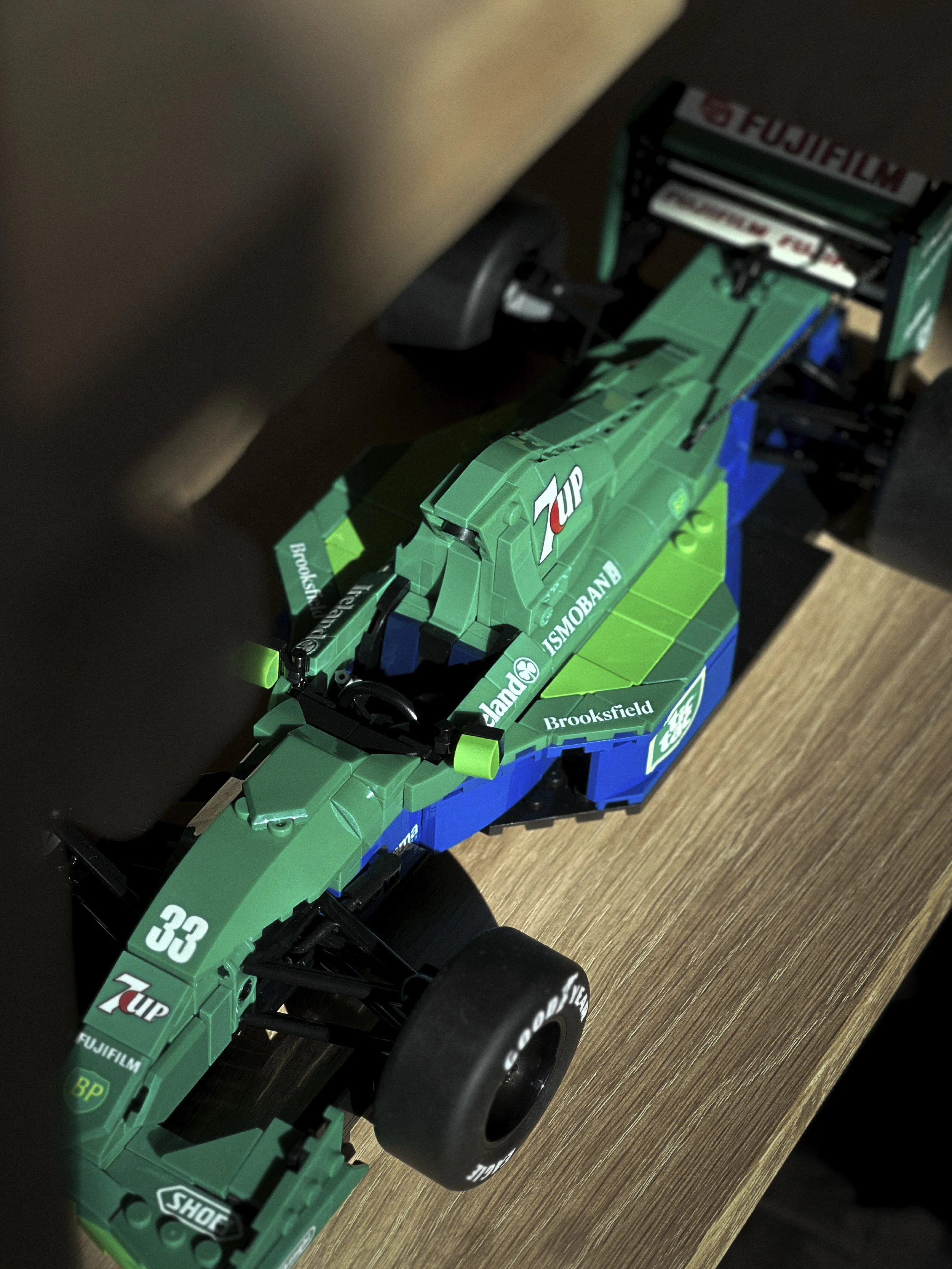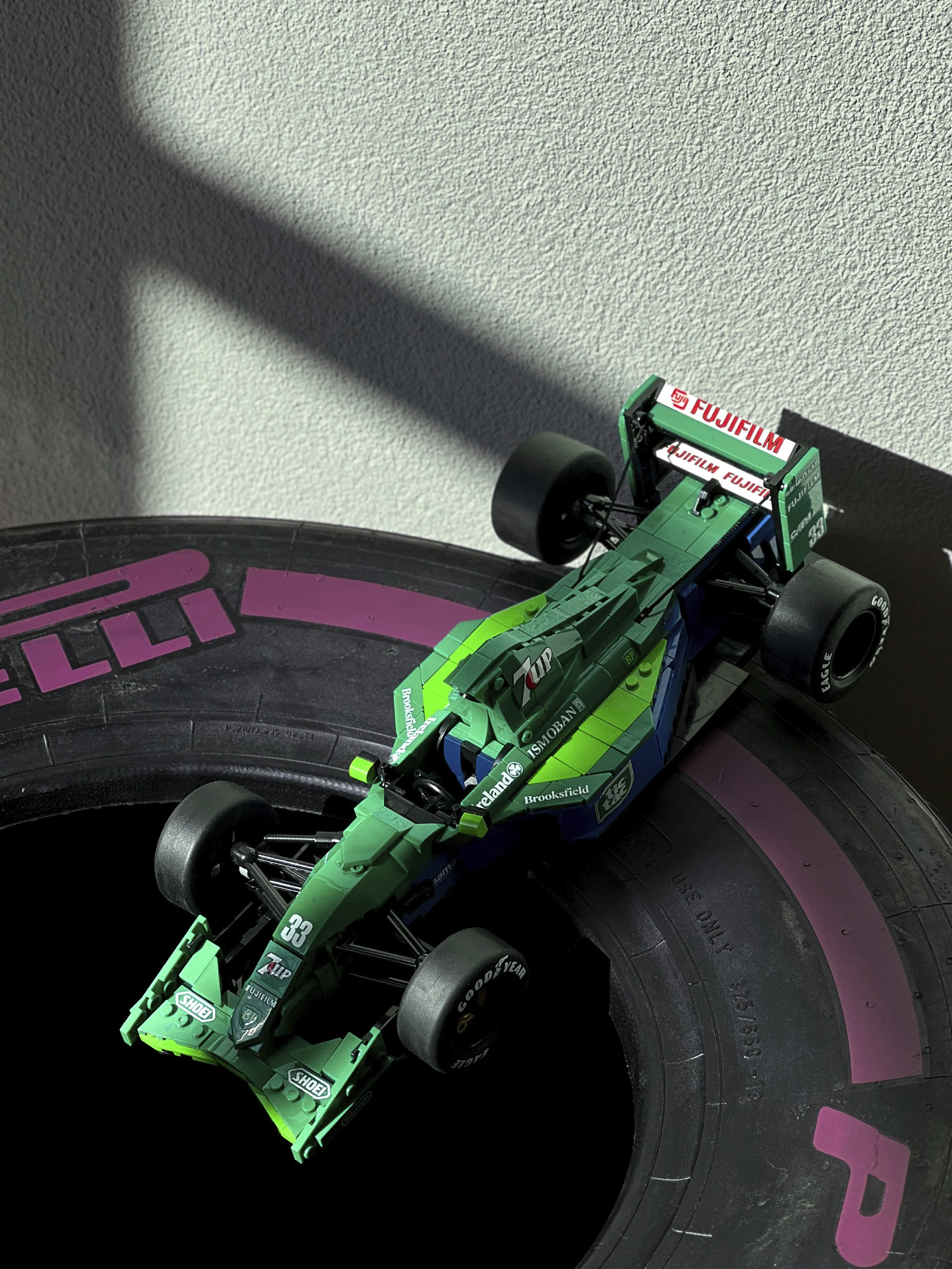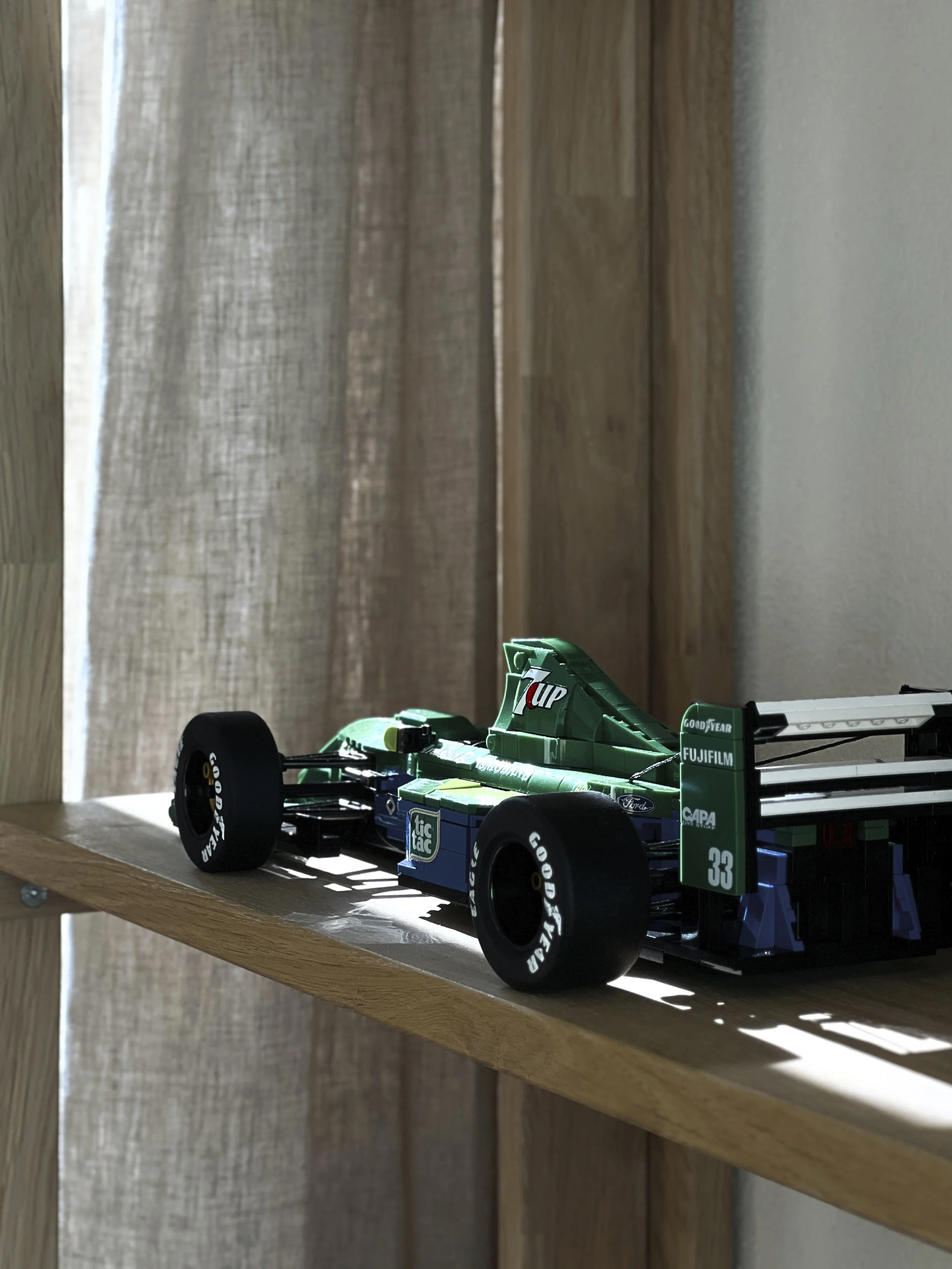
Some Formula 1 cars are remembered for their victories, others for the drivers who raced them. The Jordan 191 belongs to a rather special category. Designed under the technical leadership of Gary Anderson, it was Jordan Grand Prix's first Formula 1 car and remains one of the most recognisable designs of the early 1990s. Its slender proportions, raised nose and distinctive forward-swept air intake gave it an identity that has aged remarkably well.
It was also the car in which Michael Schumacher made his Formula 1 debut at Spa-Francorchamps in 1991. Qualifying seventh in his first Grand Prix was an extraordinary achievement, even if a clutch failure ended his race almost immediately. Few could have anticipated just how significant that weekend would become in the history of motorsport.
A personal connection
I've followed Formula 1 since childhood, with 1999 being the first season I watched from beginning to end. Growing up in Hinwil, home of the Sauber Formula 1 team, gave me a particularly close connection to the sport. Racing cars were being developed and built practically on my doorstep. Sauber naturally became my team, alongside a lasting admiration for Michael Schumacher, whose earlier involvement in the Mercedes-backed sports car programme connected him to Sauber long before his Formula 1 debut.
The Jordan 191 therefore represents more than an attractive racing car to me. It belongs to the history of a sport that has accompanied me for most of my life. And from a design perspective, I still consider it one of the finest Formula 1 cars ever produced.
Understanding the original
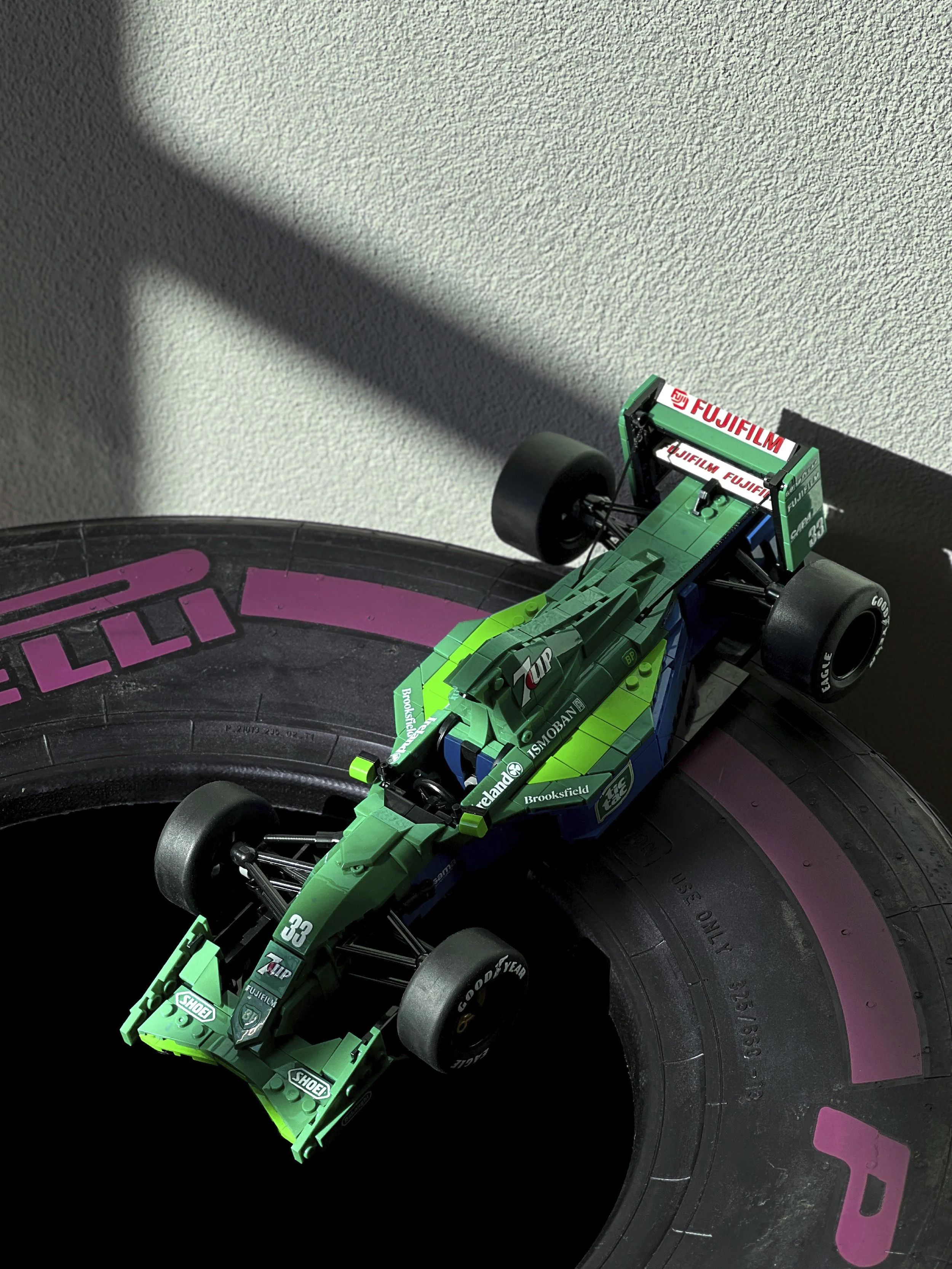
What makes Bento Brick's interpretation so convincing is the evident understanding of the original car. At this scale, proportions are particularly unforgiving. A nose that's slightly too thick, sidepods that sit too high or an incorrectly shaped air intake can fundamentally alter the character of a Formula 1 car. Bento has managed to translate these defining features into bricks with remarkable accuracy.
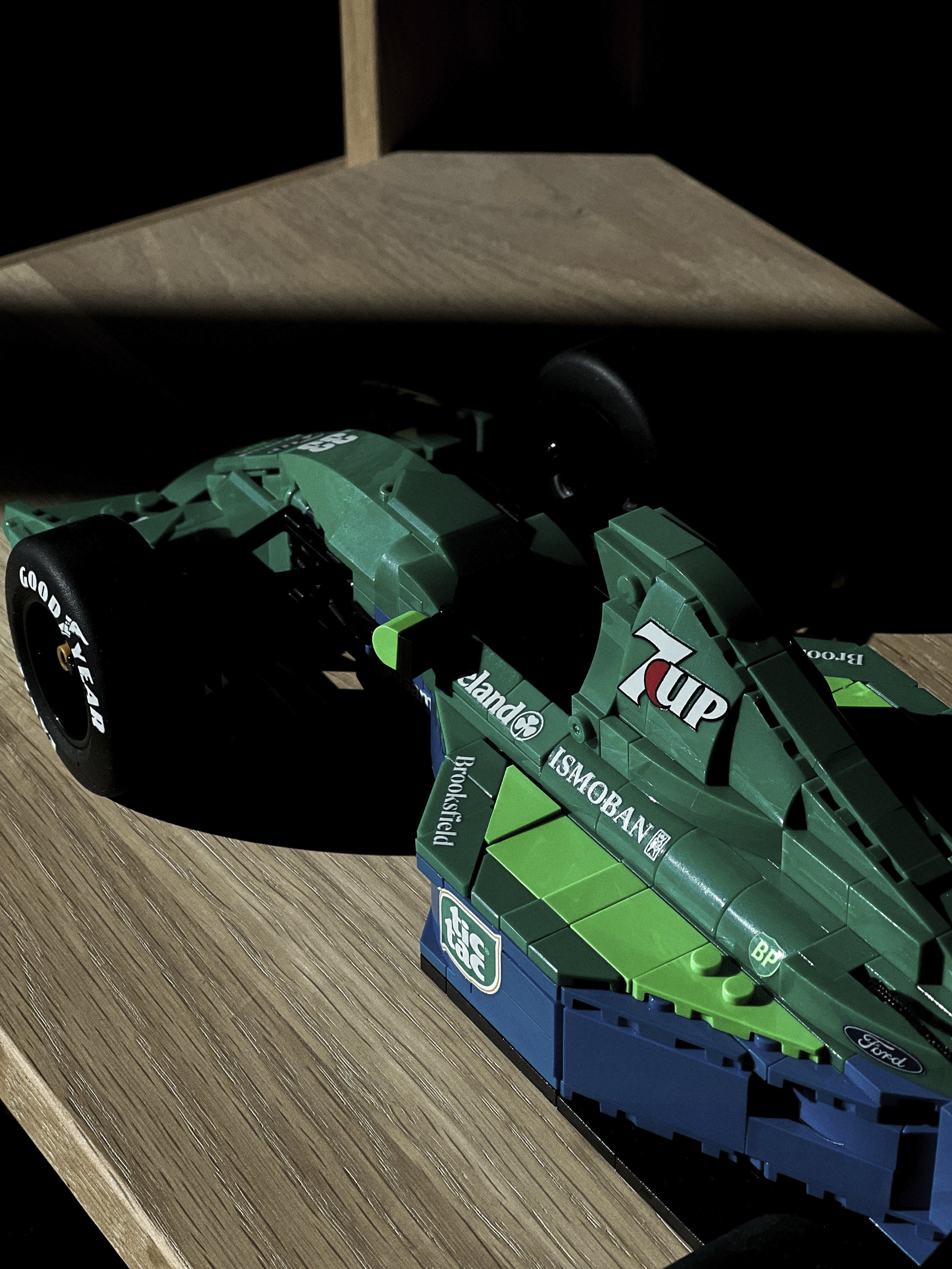
The low cockpit, slender sidepods, distinctive front wing and beautifully sculpted engine cover are all exceptionally well resolved. Even without sponsor graphics, the model is immediately recognisable as a Jordan 191. Its proportions feel carefully studied rather than approximated, which is particularly impressive considering the relatively modest number of pieces.
A thoughtful building experience
Construction begins with the underbody, followed surprisingly early by the low-mounted Ford V8. The engine is represented through some lovely brick-built detailing, giving the model a mechanical character before much of the bodywork has taken shape. The rear suspension follows, gradually connecting the mechanical elements to the slender aerodynamic sidepods. None of the techniques are particularly demanding, but the construction remains inventive and satisfying throughout.
The digital instructions deserve particular praise. Bento includes informative explanations wherever a construction step might otherwise be unclear. These small interventions make the experience remarkably approachable without compromising the sophistication of the design. After completing the cockpit, the model quickly begins to reveal its final proportions. The front suspension establishes its length before the nose and front wing bring the entire silhouette together.
For me, the front section is among the strongest parts of the model. The Jordan's raised nose and distinctive front wing are essential to its identity, and Bento has clearly invested considerable effort in reproducing them accurately. The rear wing provided the only notable challenge. Some elements were difficult to keep in position while assembling the wing between its endplates, although the completed construction proved perfectly stable.
The removable engine cover is another highlight. Its unusual forward-swept air intake, one of the original car's most characteristic design features, has been recreated with exceptional attention to shape and proportion. It's probably my favourite detail of the entire model.
The finishing touches
Another particularly successful aspect is the brick-built livery. The green and blue sections are integrated directly into the construction, giving the car its unmistakable appearance before any sponsor graphics are applied. The supplied sticker sheet, however, didn't quite meet my expectations. Matching printed background colours to the plastic underneath is notoriously difficult, and even minor differences become noticeable on a model with such carefully considered proportions.
I therefore decided to design my own decal sheet and produce it using UV-DTF printing. Finding accurate sponsor graphics from 1991 proved surprisingly challenging, and several logos had to be reconstructed digitally. It became a small graphic design project in its own right, but the additional work was worthwhile. The custom decals provide the consistency and precision I was looking for, complementing an already excellent underlying design.
Material, presentation and presence
The packaging is generic and functional, without the considered presentation found in some more premium sets. The supplied elements are generally satisfactory, although occasional scratches and slight colour inconsistencies prevent the material quality from quite matching the standard of the design itself. These shortcomings are worth mentioning, but neither significantly affected my enjoyment of the build.
What ultimately distinguishes the Jordan 191 is its presence. The proportions are remarkably convincing, the silhouette is immediately recognisable and the finished model feels sophisticated without relying on excessive complexity. It captures the character of the original car with relatively simple but intelligently chosen construction techniques.
A fitting tribute
The Jordan 191 never won a Grand Prix, yet more than three decades later, it remains one of Formula 1's most admired designs. Bento Brick has created an interpretation that does justice to its reputation. The building experience is accessible without becoming monotonous, creative without unnecessary complexity and supported by excellent instructions.
I would recommend this model equally to experienced builders and newcomers looking for a distinctive piece of Formula 1 history. Its greatest strength is the evident understanding and enthusiasm behind the design. Bento has managed to capture the character of a legendary racing car in a surprisingly modest format, making it both a pleasure to build and a genuinely beautiful object to display. The model is available through Cubertime.
STILLFORM RATING
Challenge · 7.5/10
Flow · 9.5/10
Material · 7.5/10
Instruction · 9.5/10
Packaging · 6/10
Presence · 10/10
Stillness · 9.5/10
Overall · 9.2/10
Model designed by Bento Brick and supplied by Cubertime. Custom UV-DTF decals designed and produced independently by STILLFORM.