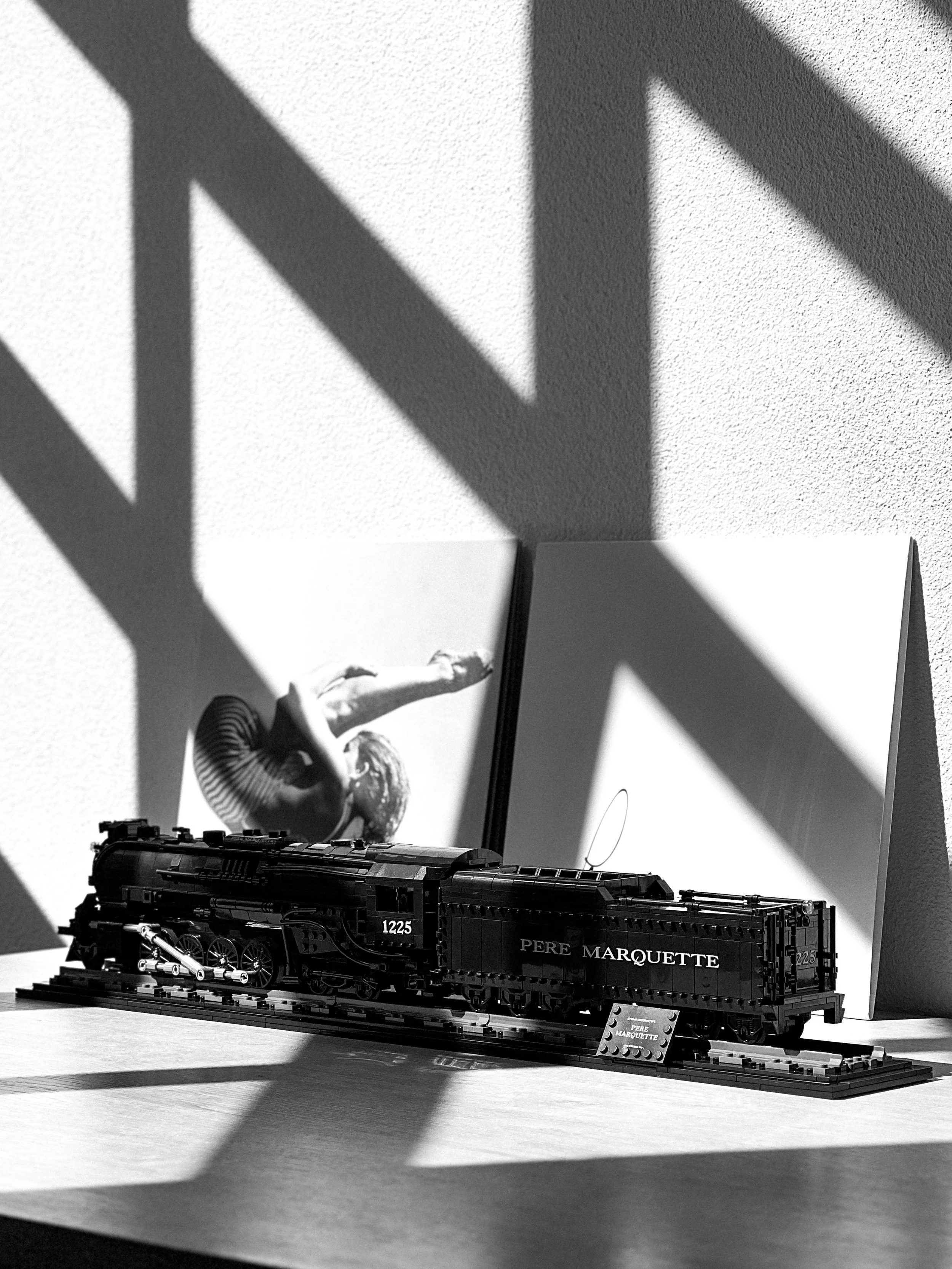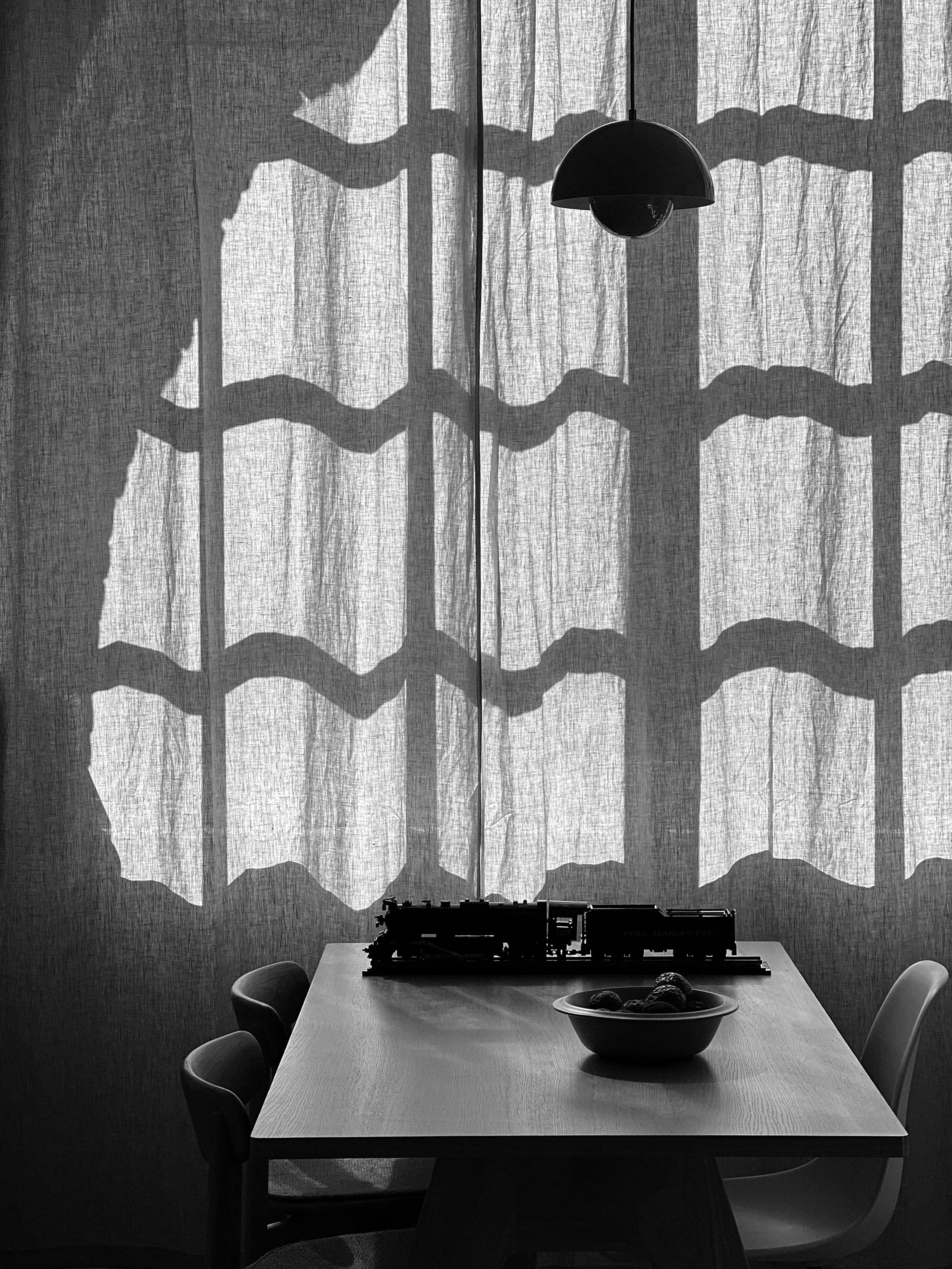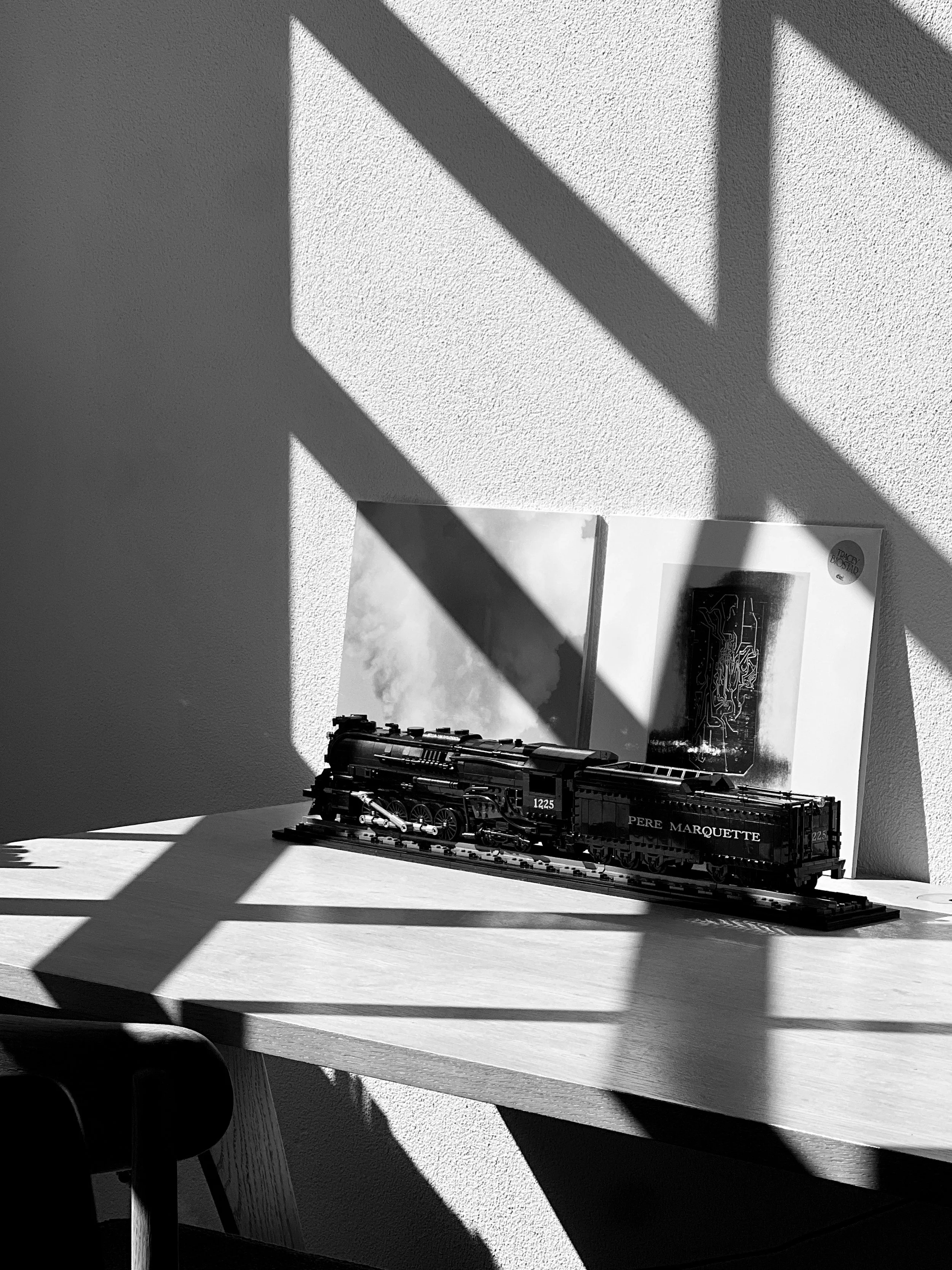
I have never been particularly interested in locomotives. Not as a child, not as a collector and, if I am completely honest, not really today either. There was no nostalgic connection waiting to be rediscovered and no encyclopaedic knowledge of steam engines hiding somewhere in the background. What caught my attention here was something much simpler: the object itself.
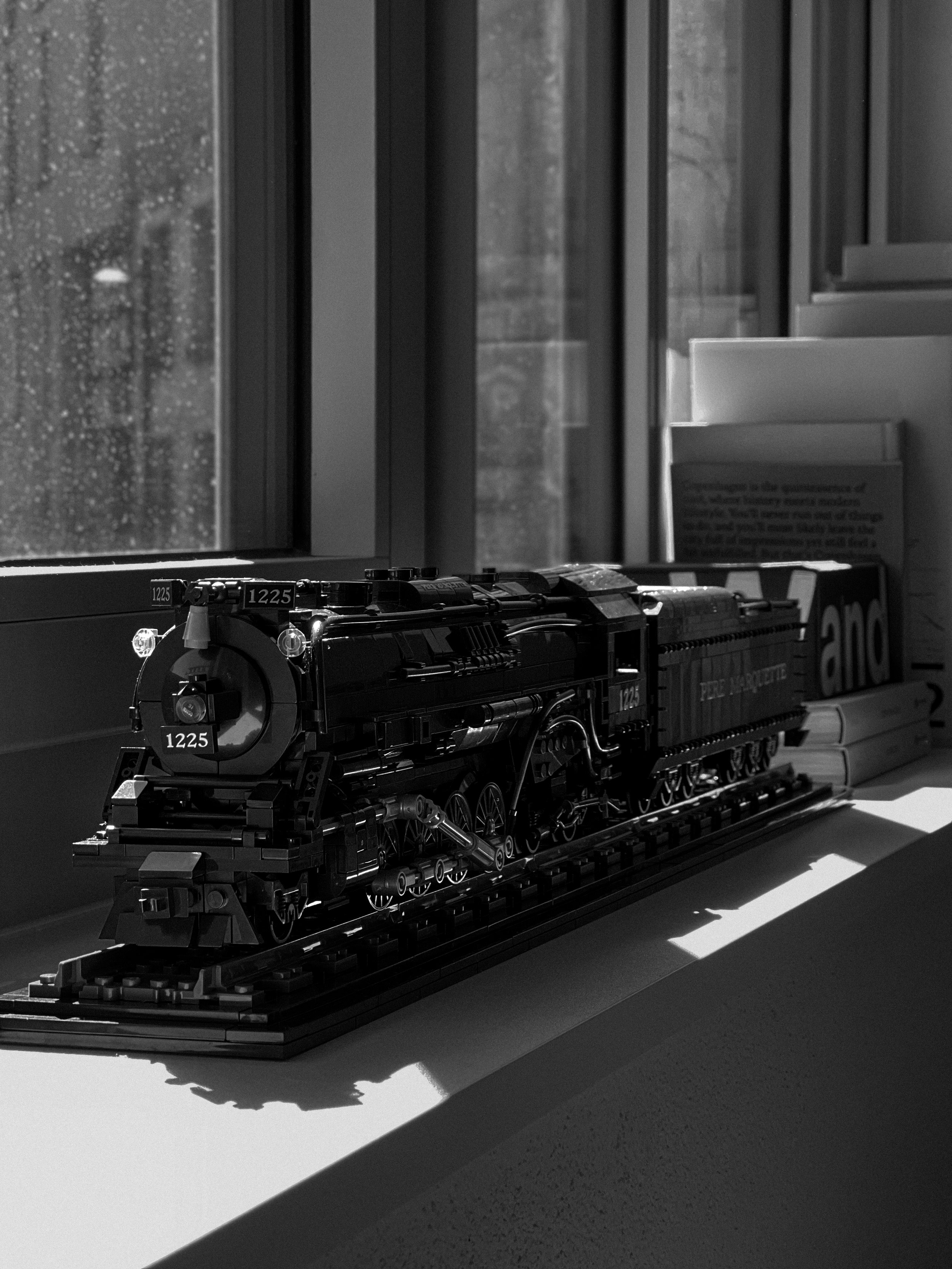
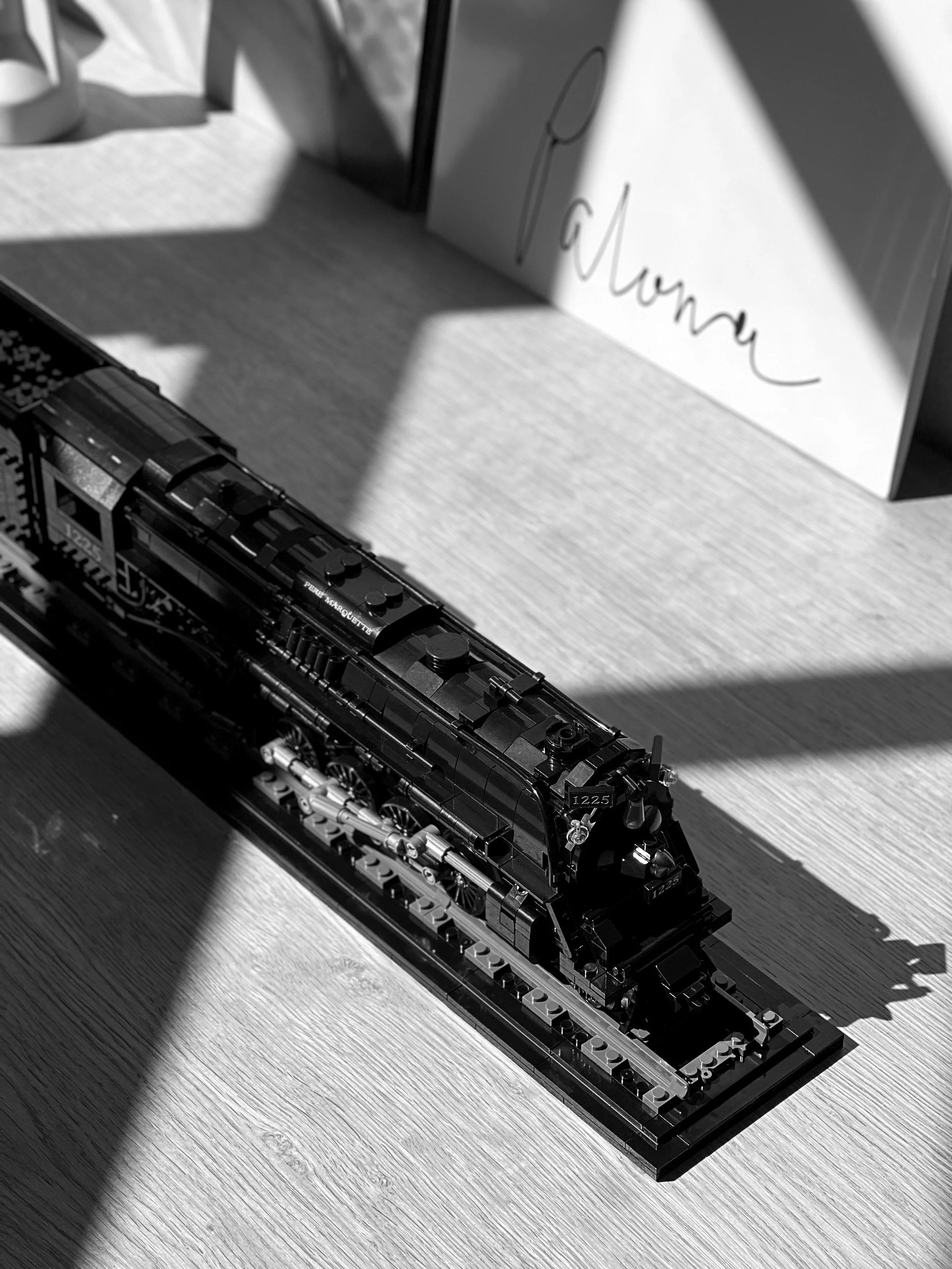
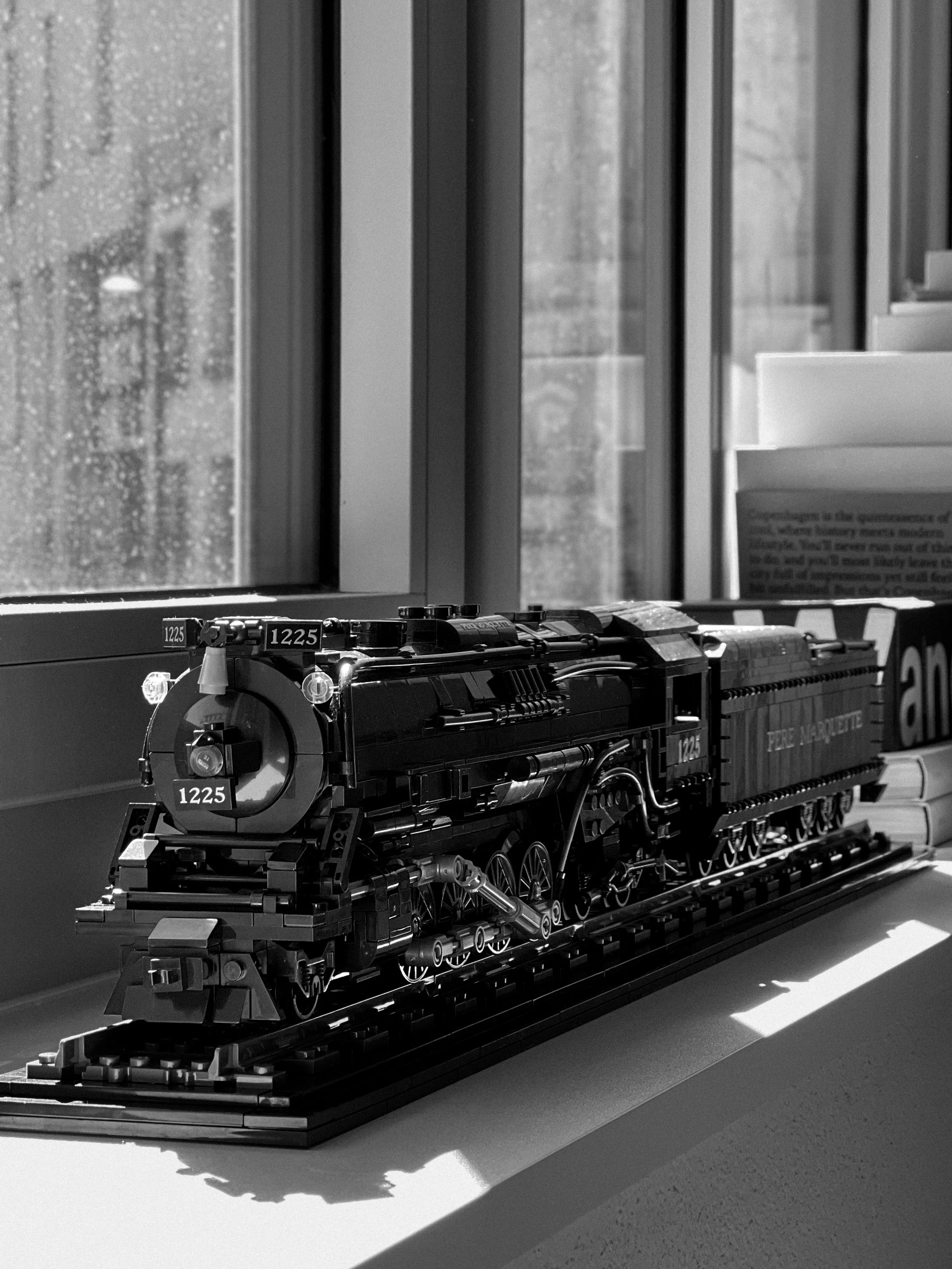
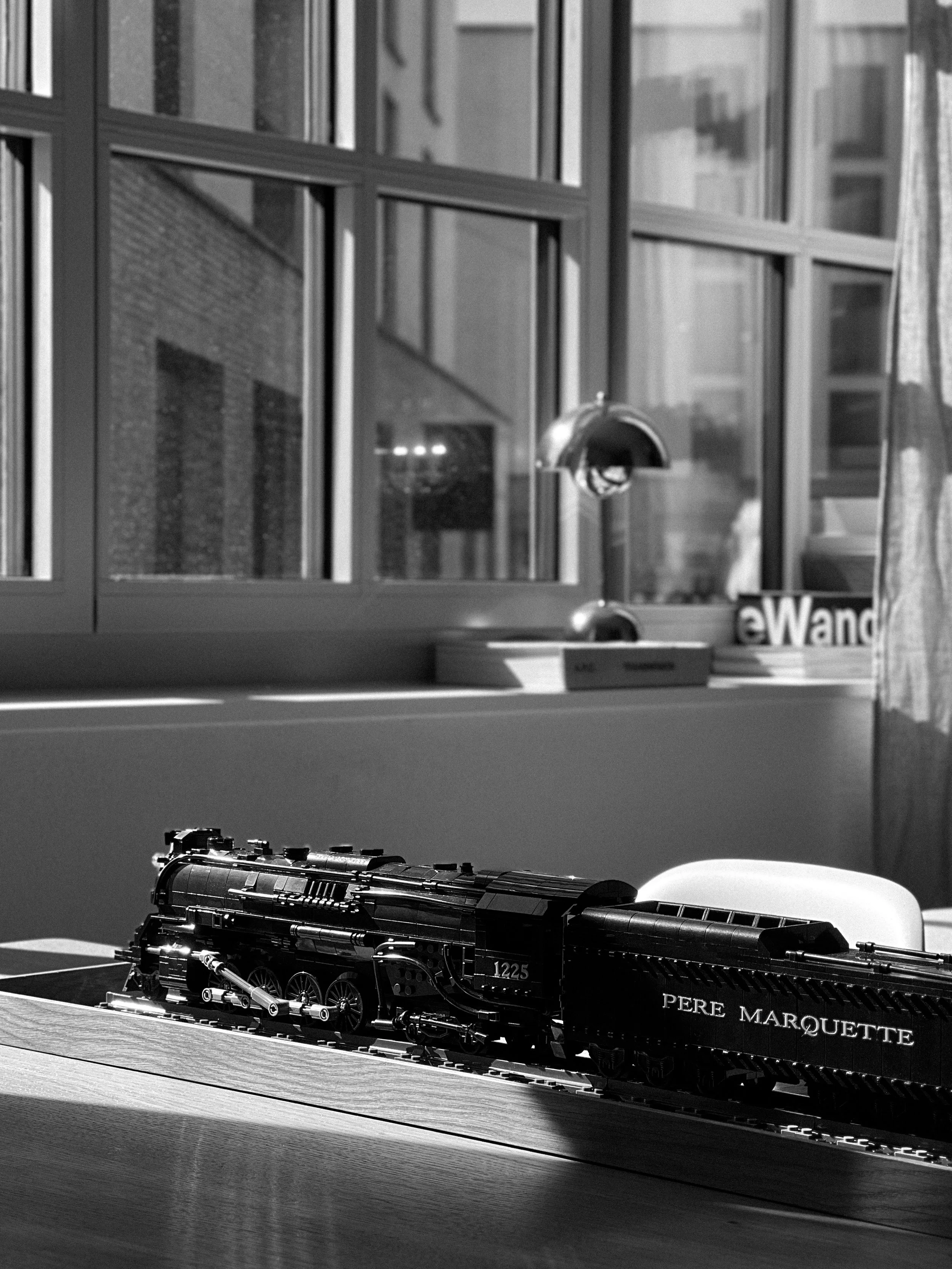
The Nifeliz Pere Marquette looked magnificent in black. Long, low and almost entirely monochromatic, with restrained bronze-gold detailing and just enough exposed machinery to communicate what it is without dissolving into visual noise. I was curious to see how an object of this complexity and history could be translated into bricks, but more than anything, I simply liked looking at it. Apparently that was enough. I ordered one without particularly high expectations and, despite an increasingly unreasonable backlog of unopened sets, felt the urge to build it almost immediately.
That instinct turned out to be a good one.
Starting with the ground
In typical Nifeliz fashion, the build is remarkably approachable. The instructions are excellent, the parts behave exactly as expected and progress comes easily. By now I have learned to appreciate this almost as a characteristic of the brand. Nifeliz builds rarely demand a fight. Instead, they create the rather pleasant conditions in which an evening disappears, everyday noise retreats into the background and assembling small pieces becomes the only thing requiring attention.
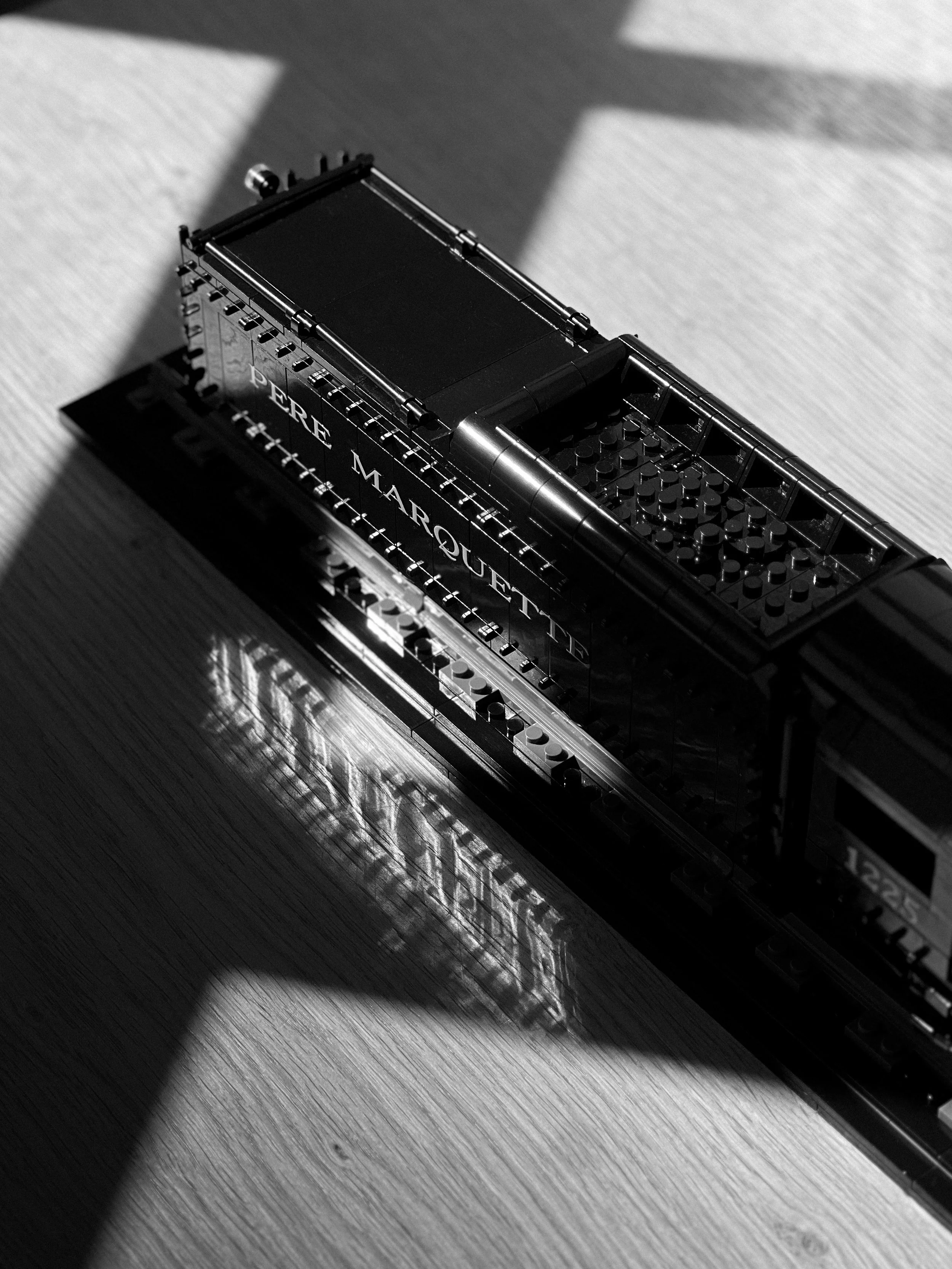
Even the beginning offered something new to me. Building the track bed was unfamiliar territory, and there is a peculiar satisfaction in constructing the infrastructure before the object that will eventually occupy it. Then comes the tender, using a little Technic underneath and plenty of System construction above. It establishes one of the model's greatest strengths very early: texture.
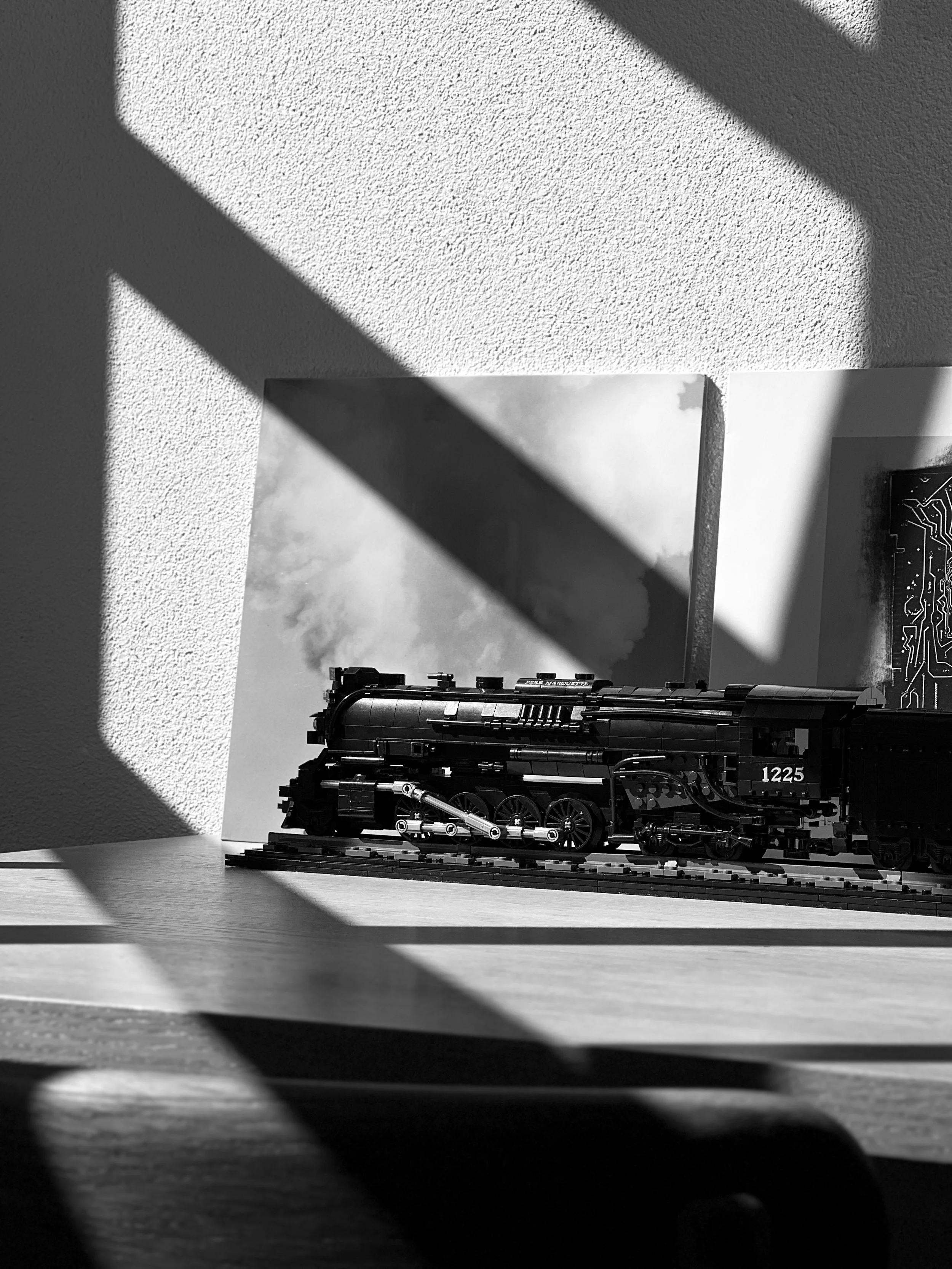
Nifeliz makes intelligent use of the available parts vocabulary to suggest the surfaces of an old steam locomotive without exaggerating them. Smooth panels sit alongside exposed studs, grilles, rods and mechanical details. Large uninterrupted black surfaces give the model elegance, while smaller elements are concentrated precisely where the machinery asks for them. It is relatively clean, yet detailed where detail has a reason to exist.
The tender came together so quickly that I found myself almost disappointed by the progress. A slightly unusual complaint, admittedly. The locomotive itself takes more effort and introduces considerably more mechanical structure, but the overall experience remains wonderfully straightforward.
Mechanics, mostly
The large driving wheels are mechanically connected and can be moved through a Hand of God control. In theory, this adds another layer of interaction to what might otherwise be a purely static model. In practice, it is probably the least convincing aspect of the set. My mechanism feels somewhat reluctant: occasionally catching, occasionally twisting itself slightly out of alignment and never displaying the effortless smoothness I experienced with the Nifeliz Turbofan Engine.
Could that be my construction? Possibly. I built it carefully, but mechanisms have a wonderful habit of reminding us that confidence and certainty are not the same thing.
More importantly, I don't care.
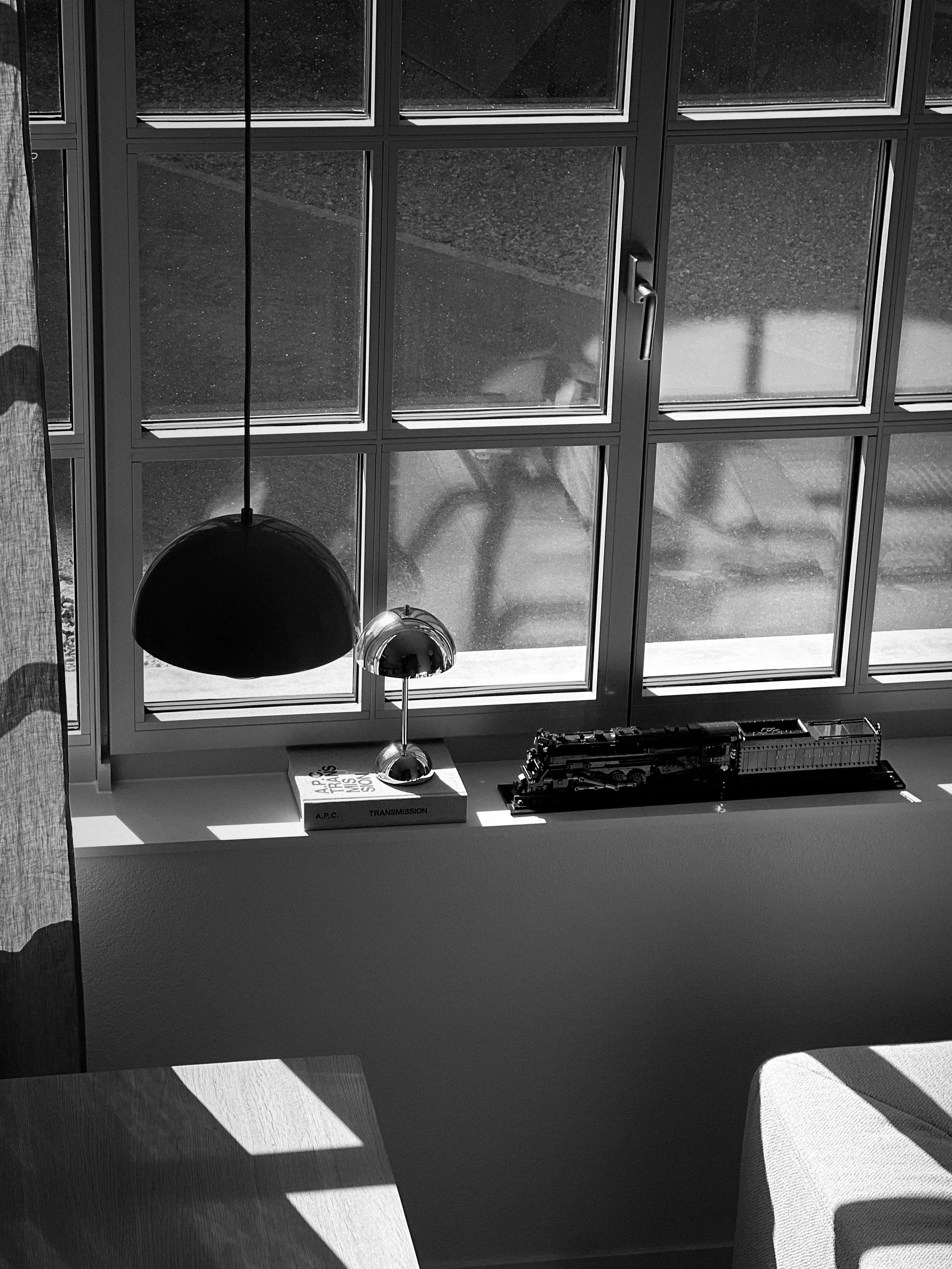
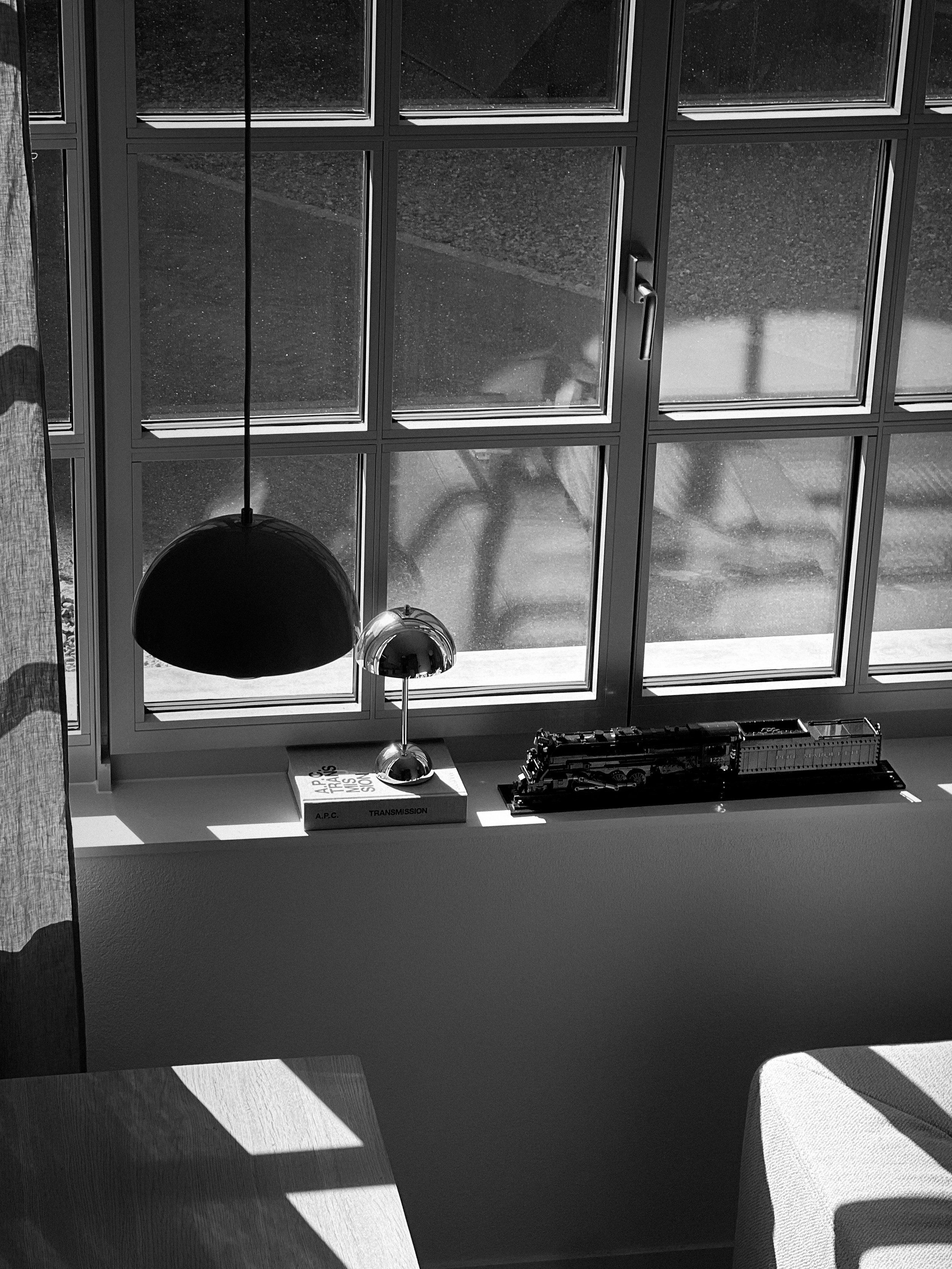
That may sound unusually forgiving, but the Pere Marquette never needed movement to justify itself for me. From the moment the locomotive was placed on its track, it became obvious that I would treat it as a display object rather than a functional toy. The mechanism could disappear entirely and very little of what attracted me to this model would be lost.
Black does most of the talking
Because ultimately, this set succeeds through appearance. The deep black body gives the locomotive an almost formal presence. Gunmetal elements introduce subtle changes in materiality, while the bronze-gold graphics and details provide exactly enough warmth to prevent the monochrome construction from becoming flat.
The parts themselves are what I have come to expect from Nifeliz: excellent. Smaller markings are printed, while the larger lettering is handled through high-quality UV-DTF transfers. Purists may always prefer prints, but visually the solution works exceptionally well here. The fine metallic-looking typography against the black body feels appropriate to the subject and gives the finished locomotive a degree of refinement that ordinary stickers would struggle to achieve.
What I appreciate most, however, is the restraint. A historic steam locomotive offers endless opportunities to add more. More pipes, more mechanical clutter, more texture, more visual information. Nifeliz seems to understand that recognisable detail and convincing design are not necessarily improved by quantity. The Pere Marquette has enough complexity to feel mechanical, but enough calm surfaces to remain elegant.
It is a surprisingly sophisticated balance.
The value of good curation
And perhaps this is where the Pere Marquette became more interesting to me than I expected. I still don't have a particular affection for locomotives. Building one has not suddenly turned me into a railway enthusiast, and I am unlikely to start studying wheel arrangements or historic timetables over breakfast.
Yet I look at this one every day.
That says something about good product curation. A compelling model does not necessarily need to appeal to an existing interest. Sometimes the choice of subject, proportion, colour and execution is strong enough to transcend the category altogether. Nifeliz selected a machine with enormous visual presence and translated it into a model that can be appreciated simply as an object.
That is increasingly what attracts me to the brand. Their portfolio does not feel restricted to a single theme. Engines, mechanical objects, botanical subjects, cameras, cars and now a steam locomotive can coexist because there is a recognisable interest in objects that deserve to be displayed after the final piece has been placed.
The Pere Marquette did not make me fall in love with trains. It did something I find considerably more interesting: it made my lack of interest irrelevant.
Will it be my last locomotive?
Probably not.
But apparently, the next one will have to be a Nifeliz.