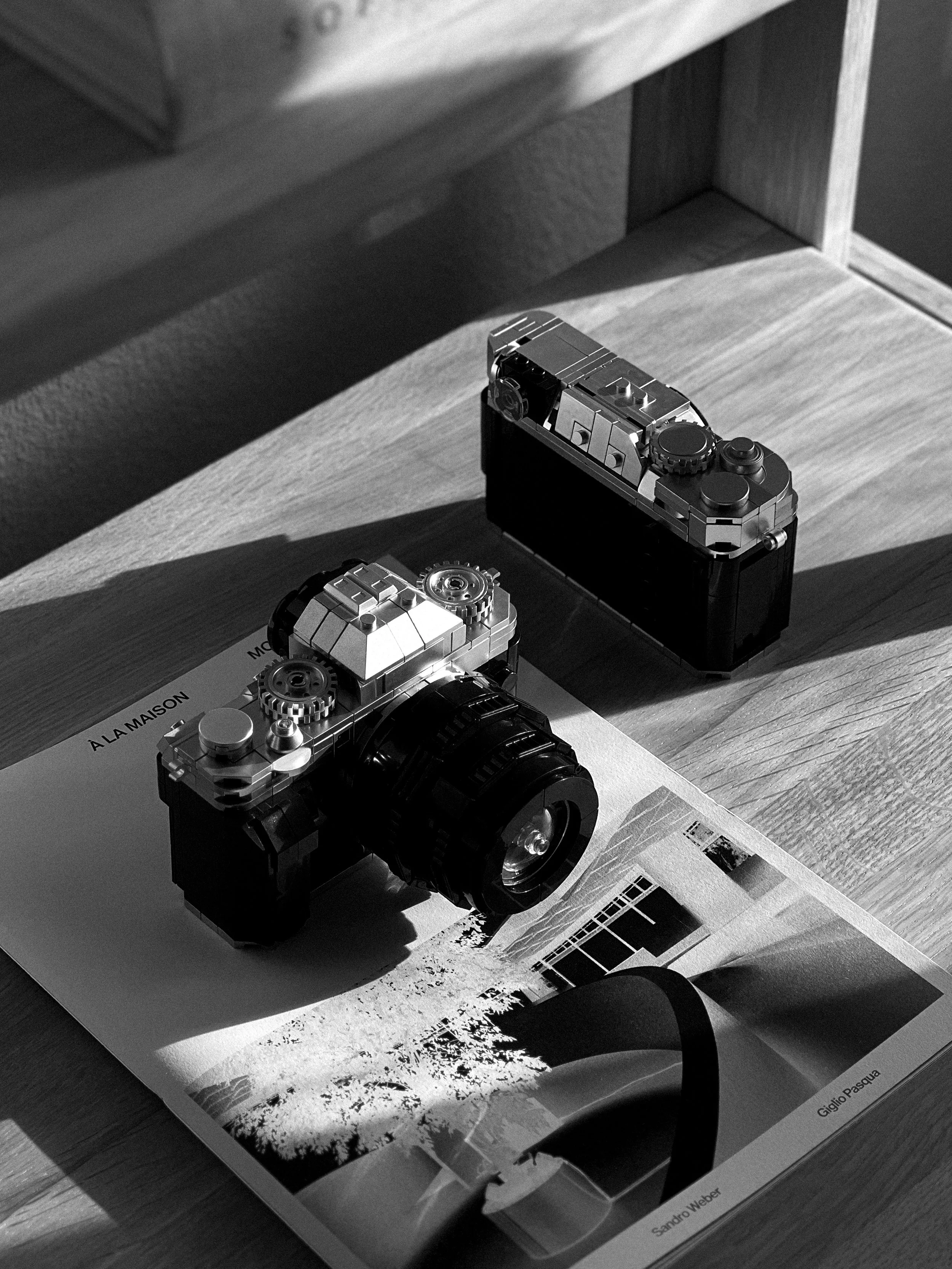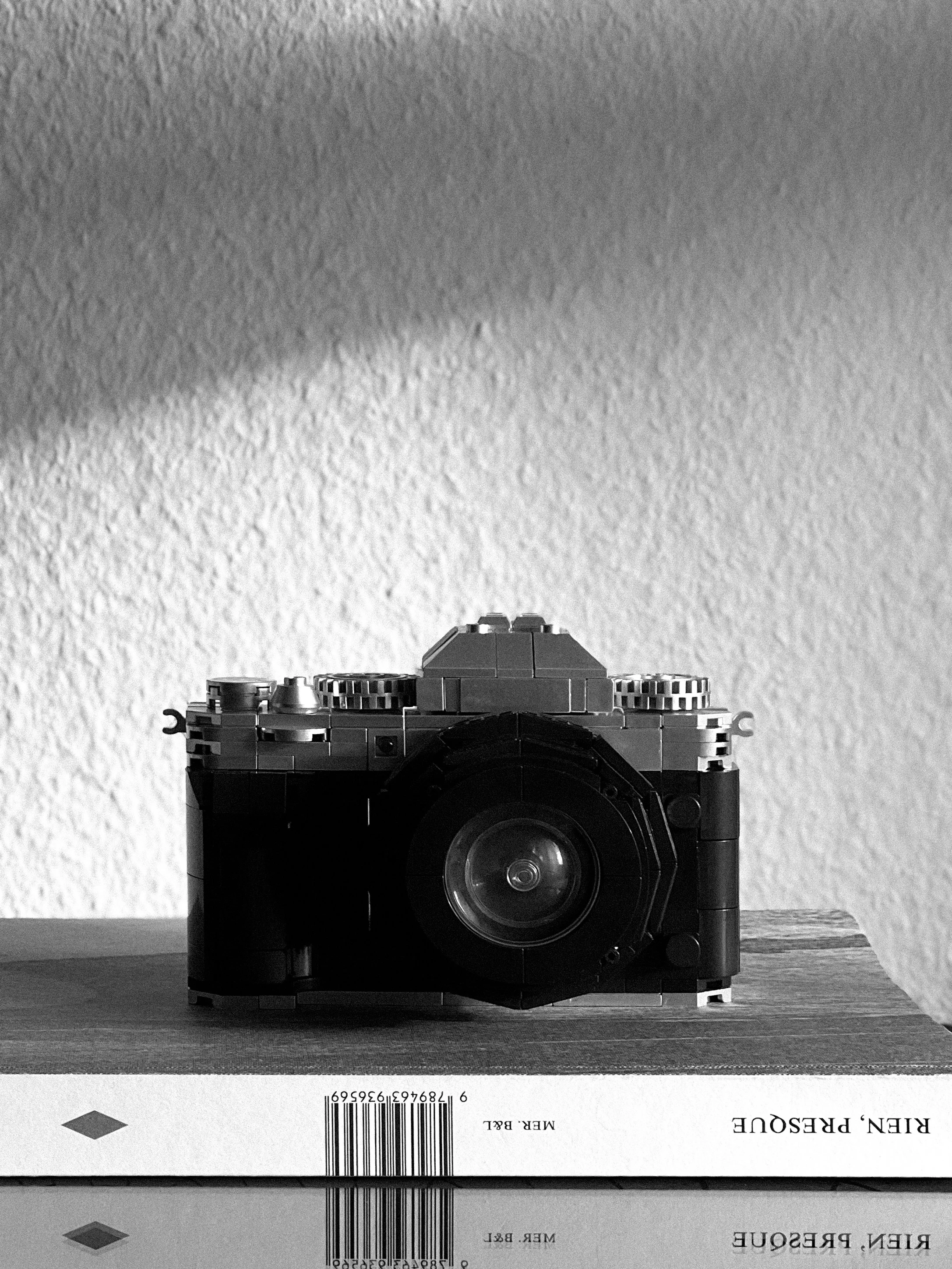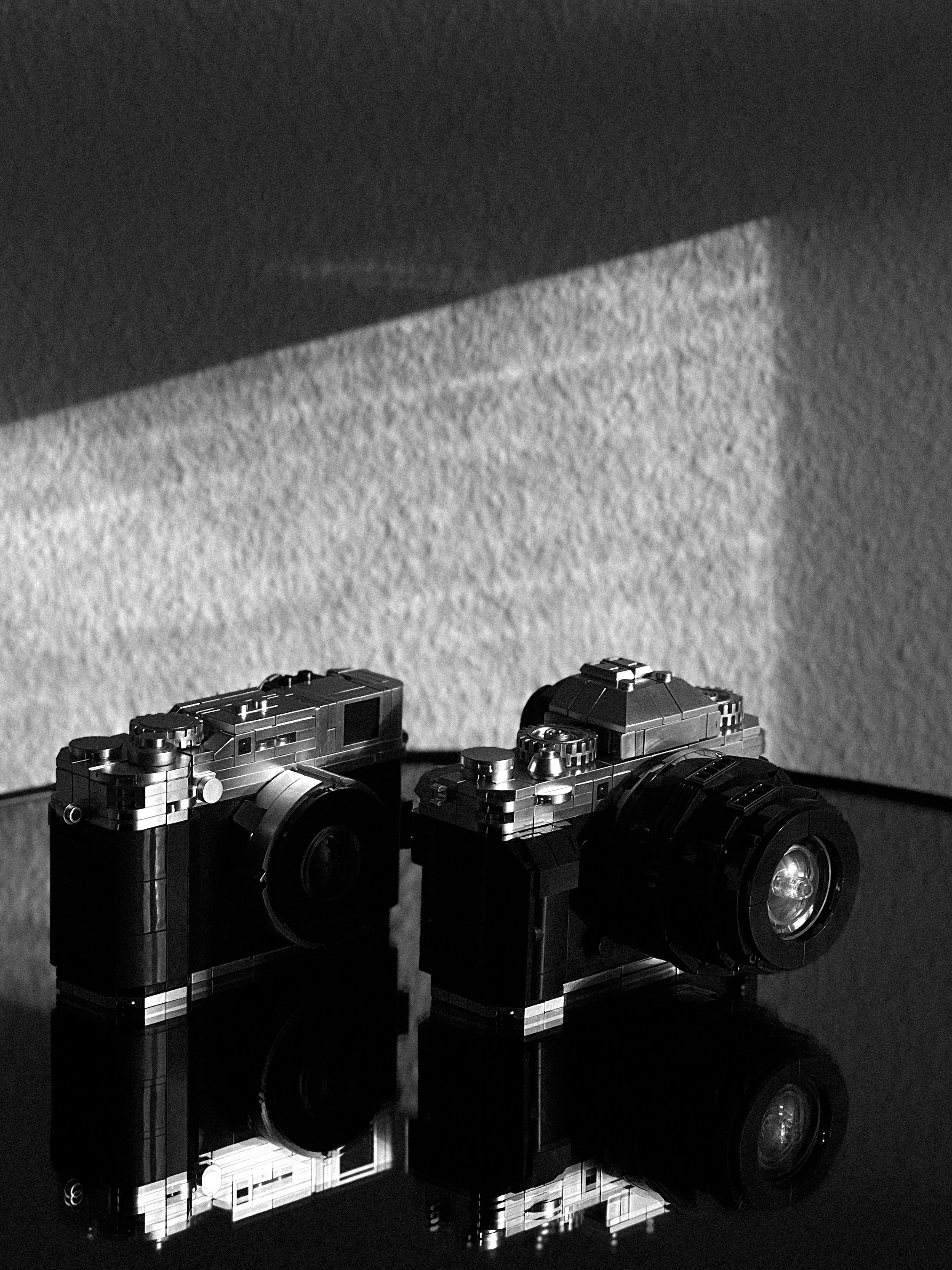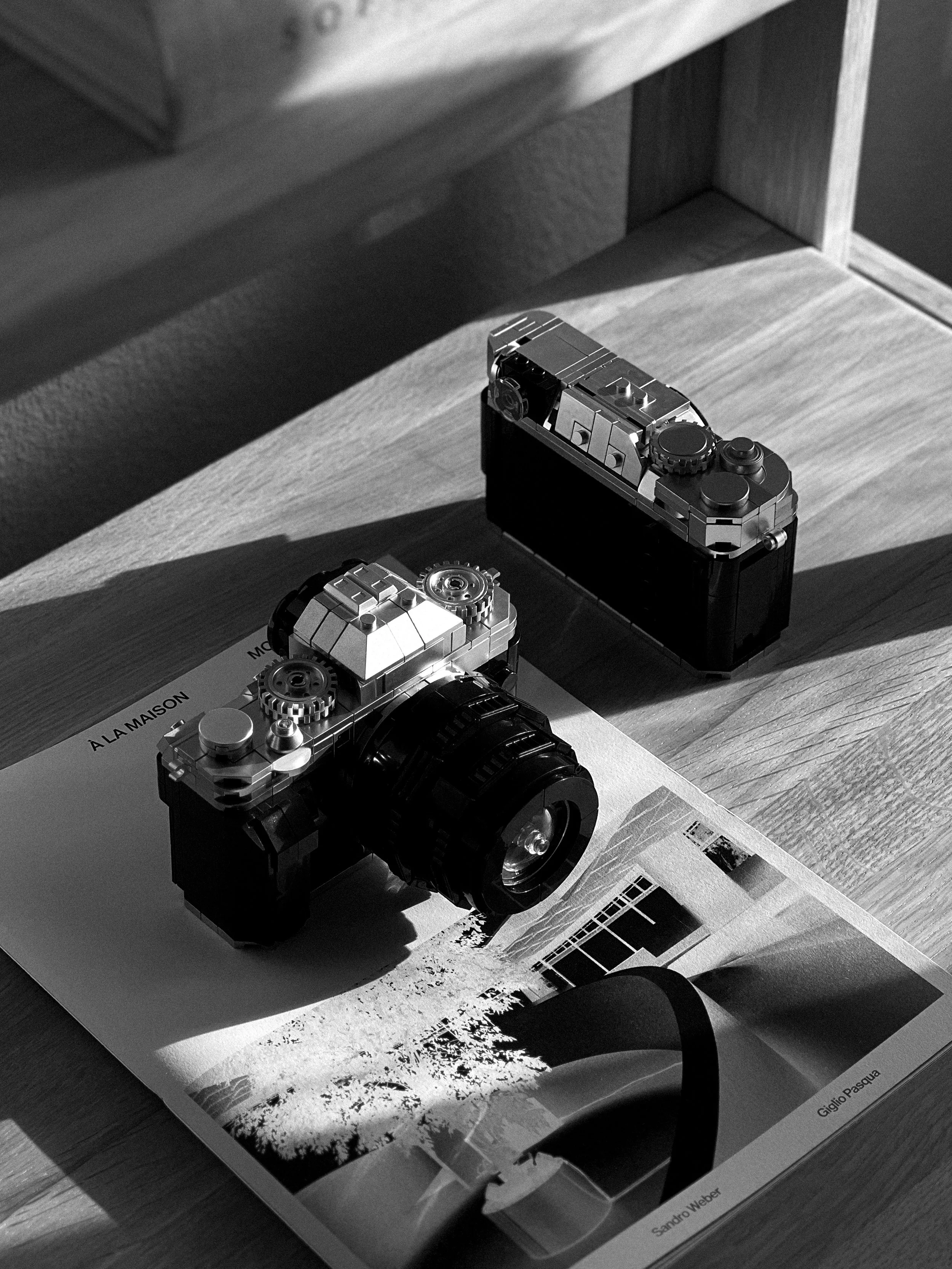
As someone who has spent years working between graphic design, creative direction and interior design, I have always been drawn to objects shaped by necessity rather than decoration. Tools whose beauty emerges not despite their function, but because of it. Photography has always been one of those passions. So it was only a matter of time before these two cameras found their place within the collection. What makes this Nifeliz set remarkable is its restraint. The colour palette is reduced to black, metallic silver, transparent elements and subtle shades of grey. No unnecessary accents. No visual noise. Just form, material and proportion. The metallic parts in particular give both models a convincing sense of weight and authenticity that photographs surprisingly well.
The build itself is equally refined. Rather than repeating techniques, both cameras follow distinct construction paths, creating a process that remains engaging from beginning to end. Thoughtful, varied and consistently satisfying. Nifeliz deliberately avoids naming specific prototypes, yet the references are unmistakable. One model captures the spirit of the classic rangefinder camera: compact, mechanical and direct, representing an era when photographers framed the world through bright optical viewfinders and relied on instinct as much as technology. The other embodies the 35mm single-lens reflex camera, the tool that would define professional and enthusiast photography for decades. Larger, more technical and more versatile, it became the instrument through which generations documented everything from family memories to world history.
Together they represent two philosophies of seeing. One intuitive. One analytical. Both iconic. Perhaps that is what makes these models so appealing. Beyond being clever brick-built replicas, they celebrate a period of industrial design where every line served a purpose and every detail earned its place. Objects created according to a principle that remains timeless: Form follows function.